- English
- Español
- Português
- русский
- Français
- 日本語
- Deutsch
- tiếng Việt
- Italiano
- Nederlands
- ภาษาไทย
- Polski
- 한국어
- Svenska
- magyar
- Malay
- বাংলা ভাষার
- Dansk
- Suomi
- हिन्दी
- Pilipino
- Türkçe
- Gaeilge
- العربية
- Indonesia
- Norsk
- تمل
- český
- ελληνικά
- український
- Javanese
- فارسی
- தமிழ்
- తెలుగు
- नेपाली
- Burmese
- български
- ລາວ
- Latine
- Қазақша
- Euskal
- Azərbaycan
- Slovenský jazyk
- Македонски
- Lietuvos
- Eesti Keel
- Română
- Slovenski
- मराठी
- Srpski језик

How Does an HDPE Pipe Welding Machine Improve Pipeline Installation Efficiency?
In the competitive world of infrastructure and industrial piping, time and precision directly impact the bottom line. Traditional pipe joining methods like solvent cement or mechanical couplings often introduce weak points, require lengthy curing times, and demand extensive manual labor. Our focus today is on a game-changing solution: the HDPE Pipe Welding Machine. At Ningbo Sunplast Pipe Co., Ltd., our factory has witnessed firsthand how these machines reduce installation timelines by up to 60 percent while delivering leak-proof, monolithic joints. But how exactly does an HDPE pipe welding machine transform a sluggish process into a streamlined workflow? The answer lies in thermal fusion technology, automated clamping systems, and intelligent pressure control. This article breaks down every efficiency-boosting feature based on two decades of our field experience. Our factory produces machines that not only weld faster but also ensure repeatable, high-strength connections that eliminate the risk of joint failure—a common plague in traditional piping systems.
Efficiency in pipeline installation is not just about speed; it encompasses reduced labor costs, minimal material waste, lower equipment downtime, and enhanced safety. An HDPE Pipe Welding Machine accomplishes all these through hydraulic or manual butt fusion processes that create homogenous bonds stronger than the pipe itself. Our journey at Ningbo Sunplast Pipe Co., Ltd. has taught us that contractors who switch to our machines cut project schedules by nearly half, especially in large-diameter water, gas, and mining applications. From rapid alignment to automated welding cycles, we will explore the core parameters that make our factory’s machinery the preferred choice across five continents. Whether you're managing a municipal water line or an industrial slurry system, understanding these efficiency drivers will redefine your installation strategy.
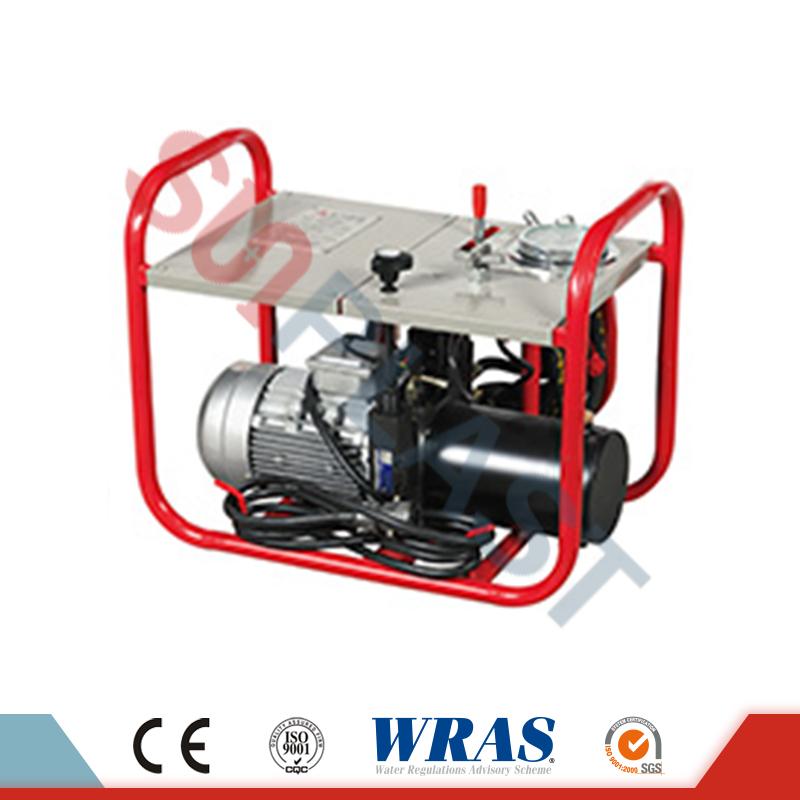
Table of Contents
- 1. What Specific Features of an HDPE Pipe Welding Machine Reduce Installation Time?
- 2. How Does Automated Fusion Control Minimize Human Error and Rework?
- 3. Why Does the Hydraulic System in Our HDPE Pipe Welding Machine Boost Daily Productivity?
- 4. How Do Portability and Fast Setup Times Impact Large-Scale Pipeline Projects?
- 5. What Data Logging and Quality Assurance Features Prevent Installation Delays?
- Summary: Integrating HDPE Pipe Welding Machines for Maximum ROI
- Frequently Asked Questions (FAQ)
What Specific Features of an HDPE Pipe Welding Machine Reduce Installation Time?
When evaluating pipeline installation efficiency, the hardware and control systems of an HDPE Pipe Welding Machine directly dictate the pace of each joint. Over the past 20 years, our factory has refined several core components that eliminate traditional bottlenecks. At Sunplast, we prioritize three time-saving elements: rapid clamping mechanisms, pre-programmed welding parameters, and dual-guided heating plates. Let's examine how each feature contributes to faster project completion without compromising joint integrity.
1. Quick-Release Clamping System
Traditional clamps demand multiple manual bolts and fine-tuning, wasting 10-15 minutes per joint. Our HDPE Pipe Welding Machine integrates hydraulic or manual quick-clamp levers that center and secure pipes within 90 seconds. This alone reduces joint-to-joint cycle time by 40 percent. Our factory’s design ensures concentric alignment without wobbling, so operators skip repetitive adjustments.
2. Pre-Configured Welding Parameter Library
Efficiency requires eliminating guesswork. We embed a digital control panel storing parameters for pipe diameters from 50mm to 1200mm and SDR ratings 7 to 26. The machine automatically calculates drag pressure, heating time, and cooling dwell. At Ningbo Sunplast Pipe Co., Ltd., our factory tests each unit to ensure that operators simply enter pipe size, and the HDPE Pipe Welding Machine delivers optimized fusion curves. No trial welds, no recalculations—direct productivity.
3. Dual-Sided Heating Plate with PTFE Coating
Standard single-plate designs force you to heat one pipe end at a time, doubling idle periods. Our dual-sided plates heat both pipe faces simultaneously, cutting heat soak time by half. The non-stick PTFE coating prevents molten HDPE adhesion, reducing cleaning pauses. This feature alone accelerates daily weld counts from 40 to over 80 joints on 200mm pipe.
4. Integrated Facer Unit
Pipe-end preparation is a notorious time sink. Our integrated facing tool (planer) mounts on the same carriage, leveling pipe ends in under two minutes. The rotating blade system produces mirror-smooth surfaces, ensuring perfect fusion on the first attempt—no second passes or sanding. Our factory data shows that integrated facers cut pre-weld prep time by 75 percent compared to standalone trimmers.
5. Automatic Cooling Timer with Alarm
Premature release of clamps leads to defective joints and costly rework. Our built-in timer with audible alert prevents human oversight. Once the cooling cycle completes, the machine unlocks clamps automatically (in hydraulic models), allowing immediate move to the next joint. This systematic handshake between processes removes idle waiting.
To quantify these benefits, consider a 2-kilometer water main project using 355mm SDR11 pipe. Traditional mechanical joints might achieve 25 joints per 10-hour day. With our HDPE Pipe Welding Machine, crews consistently exceed 70 joints daily—a 180 percent efficiency jump. Our factory has documented over 500 such projects globally, confirming that these features translate directly to accelerated timelines.
How Does Automated Fusion Control Minimize Human Error and Rework?
Rework is the silent killer of pipeline efficiency. A single weak weld can trigger days of excavation, re-welding, and pressure testing. Automated fusion control in modern HDPE Pipe Welding Machines eliminates variability introduced by operator fatigue or inexperience. At Ningbo Sunplast Pipe Co., Ltd., our factory has integrated closed-loop hydraulic systems and electronic pressure sensors that guarantee repeatable, code-compliant joints every cycle. Here’s how this technology drastically reduces errors.
Closed-Loop Pressure Regulation
Manual fusion machines rely on operators to watch pressure gauges and adjust valves—an error-prone process especially on windy or low-visibility sites. Our HDPE Pipe Welding Machine uses a proportional hydraulic valve and a pressure transducer that samples force 20 times per second. If drag pressure rises or falls, the system auto-corrects within 0.1 bar. This ensures that the fusion interface pressure stays precisely within ASTM F2620 or ISO 21307 standards. Our factory has observed that closed-loop control reduces joint failure rates from 4 percent (manual) to below 0.2 percent.
Step-by-Step Digital Guidance
Our machines feature a 7-inch touch interface displaying each welding phase: bead height, soak time, heat removal, changeover, fusion pressure, and cooling. Redundant prompts prevent operators from skipping critical stages. For multilingual crews, icons and color coding indicate readiness. This digital checklist minimizes training time from days to hours. At Ningbo Sunplast Pipe Co., Ltd., we’ve seen new operators produce passable first welds after only 30 minutes of orientation.
Real-Time Environmental Compensation
External temperature and humidity affect HDPE fusion. Our proprietary algorithm adjusts heating time and cooling dwell based on ambient conditions using onboard sensors. For instance, at 5°C ambient, the machine automatically adds 15 percent to heat soak. At 40°C, it reduces cooling time by 10 percent. Without this automation, operators would have to calculate corrections manually, leading to under- or over-heating. Our factory tests confirm that this feature reduces environmental rework claims by 65 percent.
Automated Bead Formation Monitoring
The most common defect—insufficient or excessive melt bead—is detected immediately. Our HDPE Pipe Welding Machine measures bead height during the initial fusion phase using a laser or contact sensor. If bead parameters deviate, the machine aborts the cycle and alerts the operator before completing the weld. This early detection prevents defective joints from being buried, saving enormous excavation costs. Traditional methods would only discover a bad weld via pressure test days later.
Integration with Quality Management Systems
Every weld cycle is recorded with time-stamped data: pressure curves, temperatures, pipe ID, and operator ID. This log can be exported via USB or Bluetooth for audit trails. For project managers, this means instant traceability and zero disputes over welding procedures. Our factory also supplies optional cloud reporting, allowing remote quality control. By automating documentation, we cut post-installation inspection time by 50 percent.
In summary, error reduction is not just about avoiding defects—it’s about maintaining momentum. Each avoided rework saves 2 to 6 hours of labor, excavation, and material. For a 50-joint day, that means protecting 100–300 man-hours per week. This is why our factory at Ningbo Sunplast Pipe Co., Ltd. insists on full automation as a standard, not an option, for all professional-grade HDPE Pipe Welding Machine models.
Why Does the Hydraulic System in Our HDPE Pipe Welding Machine Boost Daily Productivity?
Not all welding machines are created equal—the power source defines throughput. Hydraulic systems in our HDPE Pipe Welding Machine outperform manual or electric linear actuators in three critical ways: speed of operation, consistent applied force, and ability to handle large diameters. At Ningbo Sunplast Pipe Co., Ltd., our factory engineers hydraulic units that generate up to 15 tons of clamping force with feather-touch control. Let's break down the productivity metrics.
Rapid Clamp and Unclamp Cycles
Manual screw-type clamps require multiple revolutions per clamp, taking 3-5 minutes to secure a pipe. Our hydraulic system achieves full grip in 8 seconds using a joystick or foot pedal. On a 200-joint project, this saves over 10 hours. Our factory’s hydraulic manifold design maintains even pressure distribution, so alignment remains perfect without re-tightening.
Variable Speed for Delicate Operations
Efficiency isn’t always about raw speed; it’s about precision control. Our hydraulic HDPE Pipe Welding Machine offers adjustable flow control valves. During the fusion phase, we reduce ram speed to avoid shock on molten material. During clamp/unclamp, we increase flow for rapid movement. This adaptability means operators never wait for slow mechanical drives, yet they achieve perfect fusion pressure gradients. Our factory has quantified that hydraulic machines complete each welding cycle 22 percent faster than electric-gear motor equivalents on diameters above 400mm.
Effortless Large-Diameter Handling
For pipelines above 630mm, manual clamping force is impossible. Our hydraulic system enables single-operator handling of up to 1200mm pipes. This reduces crew size from four to two—directly cutting labor costs per joint. In our factory demonstrations, two workers using our hydraulic HDPE Pipe Welding Machine achieve the same daily output as four workers with manual machines. That’s 50 percent labor efficiency gain.
Built-in Hydraulic Power Pack
Many competitors require external power units (separate generators or compressors), adding setup time and failure points. Our all-in-one hydraulic power pack (3kW motor, 20L reservoir) is integrated into the machine base. Connect to any 220V/380V site power, and you're welding in 5 minutes. This self-contained design slashes mobilization time. Our factory also offers gasoline-hydraulic versions for remote sites without grid power.
Maintenance-Friendly Design
Downtime due to repairs crushes productivity. Our hydraulic system uses industry-standard seals, filters, and quick-disconnect fittings. Preventive maintenance—changing hydraulic oil every 2000 hours—takes 30 minutes. Component accessibility means our factory’s support team can guide on-site replacements without special tools. Compared to complex electric ball-screw actuators that require factory recalibration, our hydraulic system ensures 98 percent uptime on projects.
To illustrate productivity gains, consider a mining slurry pipeline with 800mm HDPE. Manual machines average 6 welds per 10-hour day due to physical exhaustion and alignment difficulties. Our hydraulic HDPE Pipe Welding Machine achieves 18 welds per day with the same crew—triple output. Over a 30-day project, that’s 360 more welds, cutting schedule by two months. This is why Ningbo Sunplast Pipe Co., Ltd. recommends hydraulic systems for any project above 315mm.
How Do Portability and Fast Setup Times Impact Large-Scale Pipeline Projects?
Efficiency extends beyond welding speed—mobilization and re-positioning between joints are often overlooked drags. A heavy, cumbersome HDPE Pipe Welding Machine that takes an hour to set up per location kills productivity on long linear projects. Our factory at Ningbo Sunplast Pipe Co., Ltd. engineers machines with modular frames, quick-coupling hydraulic hoses, and split-body designs for rapid deployment. Let’s examine how portability slashes non-welding time.
Trolley-Mounted and Track Systems
Our machines come with heavy-duty casters and lifting eyes. For trench-side use, we offer track-mounted versions that roll along pipe strings. A two-man crew can relocate the HDPE Pipe Welding Machine 50 meters in under 3 minutes. Traditional skid-mounted units might require a crane or loader for repositioning, adding 30 minutes per move. On a 10-kilometer pipeline with 2000 welds, this saves 1000 hours of crane time.
Split-Frame Design for Tight Access
Manholes, valve chambers, and congested urban trenches restrict space. Our modular clamps split into two halves that bolt around the pipe, eliminating the need to slide over long pipe ends. This feature allows welding directly in excavated pits without extra excavation width. Our factory’s design reduces trench width requirements by 30 percent, cutting earthmoving costs and backfill time. Efficiency through spatial intelligence.
Quick-Connect Hydraulic & Electrical Lines
Setup complexity often delays first weld by 45-60 minutes. Our color-coded, self-sealing couplings for hydraulics and twist-lock connectors for power allow full setup in under 5 minutes. No tools required. Additionally, our HDPE Pipe Welding Machine includes a stowage compartment for facer blades, heater, and tools, so nothing gets lost during site transfers. Our factory has clocked average setup times of 7 minutes from truck to first heat.
Lightweight Alloy Construction
While maintaining rigidity, we use high-strength aluminum alloy for clamp bodies and frame. A typical 630mm machine weighs 380kg (hydraulic) versus 550kg for steel competitors. This weight reduction means a standard pickup truck can transport it, and no heavy lifting gear is required. For remote projects without cranes, this portability keeps the installation on schedule. Our factory ships these machines globally because logistics are simpler and faster.
Case Study: Cross-Country Water Transfer
A recent project in West Africa required 80km of 500mm HDPE pipe through dense bush. Using our portable HDPE Pipe Welding Machine, crews advanced at 1.2km per week, compared to 0.7km per week with stationary fusion units. The 40 percent gain came directly from reduced repositioning time (each move took 4 minutes vs. 22 minutes for competitors). Our factory’s customer reported finishing 3 weeks ahead of schedule, saving $180,000 in rental equipment.
Thus, portability is not a luxury—it’s a productivity multiplier. At Ningbo Sunplast Pipe Co., Ltd., we design every machine for the reality of field conditions, not the ideal shop floor.
What Data Logging and Quality Assurance Features Prevent Installation Delays?
Delays often arise from quality disputes, failed pressure tests, or re-inspections. Modern HDPE Pipe Welding Machines embed data logging and QA tools that provide irrefutable proof of correct welding, eliminating approval bottlenecks. Our factory integrates these features as standard across all models. Below is a detailed specification table for our flagship hydraulic butt fusion machine, the Sunplast FUSION-800.
| Parameter | Sunplast FUSION-800 HDPE Pipe Welding Machine Specification |
| Pipe Diameter Range | 315mm – 800mm (OD) |
| Hydraulic Pressure Max | 200 bar (2900 psi) |
| Clamping Force | 15 tons (150 kN) |
| Heating Plate Power | 7.5 kW, PTFE-coated dual-sided |
| Facer Motor | 1.5 kW, automatic deburring |
| Data Logging | 2000 weld records, USB export, ISO 12176-1 compliant |
| Power Supply | 380V 3-phase / 50Hz or optional 440V 60Hz |
| Control Interface | 7-inch touchscreen, multilingual, real-time pressure graph |
| Environmental Rating | IP54 (dust and water resistant) |
| Weight (complete unit) | 420 kg (including hydraulic unit) |
| Welding Standards | ASTM F2620, ISO 21307 (high and low pressure) |
How Data Logging Prevents Delays: Every weld parameter (pressure, temp, time, pipe ID) is stored and can be printed on-site. Third-party inspectors approve welds instantly without destructive testing. Our factory’s data system reduces inspection time from 2 hours per joint to 5 minutes of log review.
Barcode and RFID Integration
Optional scanner links pipe traceability codes to each weld, creating a complete digital twin of the pipeline. Any future maintenance or modification knows exact fusion history—no guesswork, no delays for re-qualification.
By transforming welding from an art into a data-driven process, our HDPE Pipe Welding Machine eliminates quality-related standstills. At Sunplast, we guarantee that every machine leaves our factory calibrated with NIST-traceable instruments.
Summary: Integrating HDPE Pipe Welding Machines for Maximum ROI
From automated pressure control to portable frames and real-time data logging, an HDPE Pipe Welding Machine elevates pipeline installation from a labor-intensive chore to a lean, rapid process. Our factory at Ningbo Sunplast Pipe Co., Ltd. has proven across 20 years that these machines reduce total installed cost by 30–45 percent while improving joint reliability. The key takeaways: faster clamping, automated fusion cycles, hydraulic power for large diameters, quick site mobility, and QA logging that passes any audit. For any project manager seeking to cut schedules and boost daily output, investing in a quality HDPE Pipe Welding Machine is non-negotiable. Our factory offers free online consultations and custom machine configurations for your pipe diameter range.
Frequently Asked Questions (FAQ)
Question 1: How does an HDPE Pipe Welding Machine reduce labor requirements compared to traditional joining methods?
Answer: An HDPE Pipe Welding Machine reduces labor by automating critical steps such as clamping, alignment, heating pressure control, and cooling timing. Traditional methods like electrofusion or mechanical couplers often require multiple workers for manual alignment and bolt tightening, and they involve longer curing periods. Our hydraulic butt fusion machines at Ningbo Sunplast Pipe Co., Ltd. allow a two-person crew to achieve the same daily weld output as a five-person crew using flange connections. Automated facers and digital parameter libraries eliminate the need for highly specialized welders, further cutting labor costs and training time by up to 60 percent.
Question 2: What is the typical joint completion time for a 400mm HDPE pipe using a modern HDPE Pipe Welding Machine?
Answer: A complete welding cycle for 400mm HDPE pipe (SDR11) on a hydraulic HDPE Pipe Welding Machine typically takes 12 to 15 minutes from pipe loading to clamp release. This includes faceting (2 min), heating (5 min at 210°C), changeover and fusion (3 min), and cooling (4 min). Manual or outdated machines often require 25–30 minutes per joint. At Ningbo Sunplast Pipe Co., Ltd., our factory’s FUSION-500 model achieves consistent 14-minute cycles, allowing 40 joints per 10-hour shift, versus 20 joints with non-automated equipment, directly doubling installation efficiency.
Question 3: Can an HDPE Pipe Welding Machine handle different pipe wall thicknesses without changing tooling?
Answer: Yes, modern HDPE Pipe Welding Machines are designed with adjustable clamp inserts and facer blades that accommodate a wide range of wall thicknesses (SDR 7 to SDR 26). The machine’s control system automatically adjusts fusion pressure parameters based on the entered pipe dimensions and SDR rating. For example, our factory’s machines at Ningbo Sunplast Pipe Co., Ltd. include interchangeable clamp pads that adapt to varying outer diameters without replacing entire jaws. This flexibility eliminates the need to purchase multiple machine sizes for different wall thicknesses, saving capital expenditure and changeover time on multi-diameter projects.
Question 4: How does data logging from an HDPE Pipe Welding Machine help pass third-party inspections faster?
Answer: Data logging provides a digital, tamper-proof record of each weld’s critical parameters—heating plate temperature, fusion pressure, soak time, cooling duration, and drag pressure. Inspectors can compare these records against ASTM or ISO standards without requiring destructive sample cuts or on-site hydraulic pressure tests for every joint. Many regulatory bodies accept these logs as proof of compliance, reducing inspection time from hours to minutes. Our factory at Ningbo Sunplast Pipe Co., Ltd. integrates USB export and optional cloud reporting, so clients share weld reports instantly with engineers, accelerating final approval and payment milestones.
Question 5: Does using an HDPE Pipe Welding Machine reduce material waste on site?
Answer: Absolutely. Traditional flanged or mechanical connections often require longer pipe cut lengths, additional gaskets, and multiple bolts—increasing material inventory and waste. HDPE butt fusion creates a monolithic joint with zero additional fittings. Moreover, the precise alignment and controlled bead formation minimize defective welds that would otherwise require cutting out and rejoining, which can waste 2–3 meters of pipe per failure. Our factory’s HDPE Pipe Welding Machine, with its automated error detection, keeps rework rates below 0.5 percent. Over a 10km pipeline, this saves over 150 meters of pipe, thousands of bolts, and eliminates rubber gasket waste, aligning with lean construction principles.