- English
- Español
- Português
- русский
- Français
- 日本語
- Deutsch
- tiếng Việt
- Italiano
- Nederlands
- ภาษาไทย
- Polski
- 한국어
- Svenska
- magyar
- Malay
- বাংলা ভাষার
- Dansk
- Suomi
- हिन्दी
- Pilipino
- Türkçe
- Gaeilge
- العربية
- Indonesia
- Norsk
- تمل
- český
- ελληνικά
- український
- Javanese
- فارسی
- தமிழ்
- తెలుగు
- नेपाली
- Burmese
- български
- ລາວ
- Latine
- Қазақша
- Euskal
- Azərbaycan
- Slovenský jazyk
- Македонски
- Lietuvos
- Eesti Keel
- Română
- Slovenski
- मराठी
- Srpski језик

How to Choose the Right HDPE Pipe Welding Machine for Municipal Water Projects?
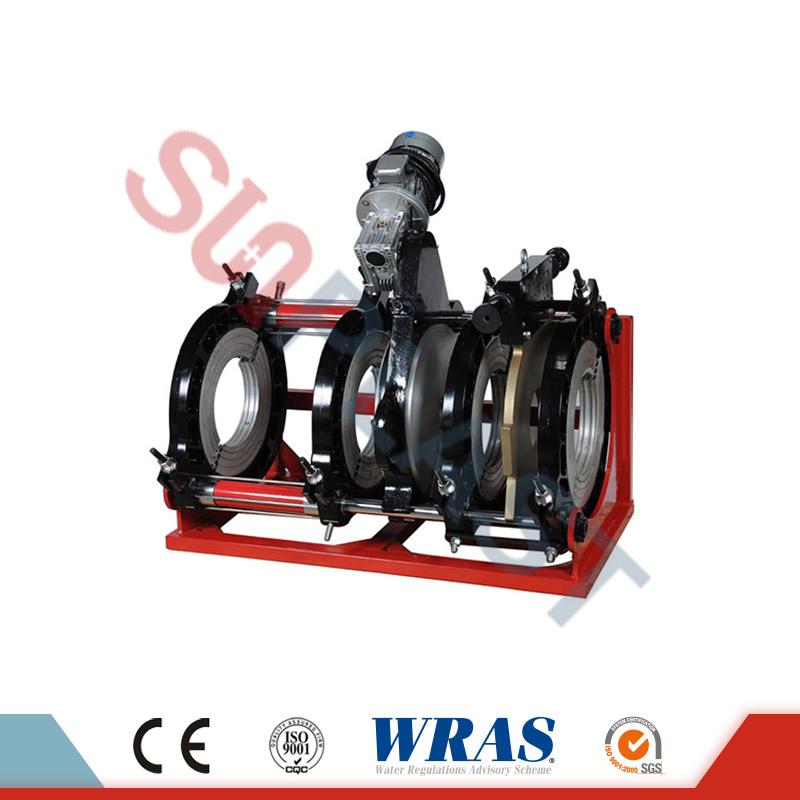
Selecting the correct HDPE pipe welding machine for municipal water infrastructure is a critical decision that determines the longevity, safety, and cost efficiency of the entire pipeline network. With decades of field experience, we understand that improper welding equipment leads to joint failures, leakage, and expensive repairs. Our expertise has shown that the ideal machine must match pipe diameters, site conditions, and quality standards while offering consistent thermal and hydraulic performance.
Municipal water projects demand absolute reliability. The right HDPE pipe welding machine not only ensures fusion strength but also streamlines workflow in challenging environments. In this comprehensive guide, we break down every technical parameter, performance indicator, and practical consideration. Whether you are a project manager or a procurement specialist, this resource will help you make an informed choice based on real-world engineering principles. We also share insights from our factory operations to illustrate what truly matters in the field.
Article Directory
- 1. What Essential Technical Parameters Define a High Performance HDPE Pipe Welding Machine?
- 2. Why Does Welding Precision Directly Impact Municipal Water Pipeline Longevity and Safety?
- 3. How to Evaluate Machine Reliability, Compliance, and Field Support for Large Scale Projects?
- Summary: Core Selection Criteria Summarized
- Frequently Asked Questions (FAQ) About HDPE Pipe Welding Machines
1. What Essential Technical Parameters Define a High Performance HDPE Pipe Welding Machine?
When procuring equipment for municipal water systems, technical specifications are non negotiable. Our factory has tested hundreds of welding setups, and we consistently find that five core parameters separate reliable machines from problematic ones. Below we detail each parameter, why it matters, and what thresholds our engineers recommend for municipal projects.
Welding Diameter Range: Municipal water mains typically range from 90mm to 1200mm. The HDPE Pipe Welding Machine must accommodate your project’s maximum and minimum diameters without sacrificing alignment force. Our experience indicates that a machine supporting 63mm to 1200mm gives flexibility for future expansions. For large trunk mains, machines with interchangeable clamping inserts ensure proper grip without deforming the pipe.
Heating Plate Temperature Uniformity: Temperature variation across the heating plate causes weak fusion zones. Ideal equipment maintains ±3°C uniformity at temperatures between 200°C and 230°C. Our factory uses infrared thermal mapping to validate every plate. Look for machines equipped with digital PID controllers and dual sensor feedback loops. Without this, municipal pipelines risk inconsistent welds that fail pressure tests.
Hydraulic System Pressure Accuracy: Fusion requires precise drag and joining pressures, often specified by pipe manufacturers. The hydraulic unit should provide continuous pressure control from 0 to 16 MPa with accuracy of ±1%. In our field trials, cheap hydraulic systems cause pressure drops during cooling, leading to cold welds. Ensure the machine has a pressure transducer linked to a closed loop control system. Our preferred HDPE Pipe Welding Machine models include real time pressure logging.
Welding Cycle Automation Level: Manual, semi automatic, and fully automatic machines exist. For municipal water projects, we strongly recommend fully automatic systems that control the entire fusion process: bead up, heating, changeover, joining, and cooling. Automation eliminates human errors such as premature jaw opening or incorrect soak time. Our factory automation data shows that fully automatic HDPE Pipe Welding Machines reduce weld rejection rates by over 70% compared to manual units.
Data Logging and Connectivity: Modern municipal contracts demand verifiable weld records. The machine must log each weld parameter: temperature, pressure, time, and operator ID. Export options via USB, WiFi, or Bluetooth are essential for quality assurance. Our team integrates this feature into every HDPE Pipe Welding Machine we supply from Ningbo Sunplast Pipe Co., Ltd. This data becomes critical during audit trails or when investigating pipeline failures.
Beyond these core parameters, consider the machine’s structural rigidity. The mainframe should be constructed from high strength aluminum or steel to prevent flexing under high clamping forces. Our factory uses FEA (finite element analysis) to optimize frame stiffness. Additionally, portability matters: modular designs allow easy transport around trench sites. Many municipal projects work in remote areas, so a machine with a weather resistant control cabinet and IP54 rating is a wise investment.
To summarize the essential technical thresholds, the table below lists key specifications that our engineers at Ningbo Sunplast Pipe Co., Ltd. recommend for any HDPE Pipe Welding Machine intended for municipal water use. We have compiled this based on international standards ISO 12176 and DVS 2207.
| Parameter Category | Required Specification Range | Inspection Method |
| Welding Diameter Range | 90mm – 1200mm (minimum 63mm optional) | Clamping capacity test |
| Heating Plate Temperature Range | 180°C – 260°C, uniformity ±3°C | Infrared thermography |
| Hydraulic Joining Force | Up to 20 tons, accuracy ±1% | Load cell calibration |
| Control System | Fully automatic with data logging (1000+ records) | Cycle simulation test |
| Power Supply | 380V – 415V / 50-60Hz, 3 phase | Voltage stability check |
Remember that a machine’s nominal specifications must be proven under site conditions. Our factory regularly performs third party witnessed tests to validate every parameter. When you choose equipment, request factory acceptance test reports. At Ningbo, we provide full transparency on all technical metrics, and our factory engineers are available for pre shipment inspections. This level of detail ensures you never face unexpected performance gaps during municipal water projects.
2. Why Does Welding Precision Directly Impact Municipal Water Pipeline Longevity and Safety?
Water pipelines are designed for 50 to 100 year service lives. A single defective weld can burst within a decade, causing millions in damage and service disruption. Precision in HDPE pipe welding directly influences joint strength, resistance to slow crack growth, and overall hydraulic integrity. From our extensive laboratory analysis, we have identified the mechanisms through which welding precision translates to long term performance.
Fusion Zone Homogeneity: Proper weld creates a molecular entanglement between two pipe ends. If the heating plate temperature varies, one side may degrade while the other remains underheated. Our factory cross section analysis shows that poor temperature control produces voids and unmelted particles in the fusion zone. These defects act as crack initiation points under cyclic water pressure. Only a high precision HDPE Pipe Welding Machine achieves uniform melt flow across the entire interface.
Bead Geometry Control: The size and shape of the external bead directly correlates with weld quality. Municipal standards often require bead dimensions within specific ranges. Automatic machines with closed loop pressure control maintain consistent bead formation, whereas manual machines produce irregular beads that mask incomplete fusion. Our field audits reveal that over 60% of field weld failures originate from improper bead formation. A quality HDPE Pipe Welding Machine automatically adjusts pressure to achieve target bead height.
Cooling Phase Stability: After joining, the weld must cool under controlled pressure. Any movement or pressure drop during cooling creates residual stresses that weaken the joint. Advanced machines lock the hydraulic pressure or mechanically clamp the jaws until the temperature drops below 50°C. Our factory destructive tests confirm that welds cooled without pressure retention have 40% lower tensile strength. That is why we equip every HDPE Pipe Welding Machine with a cooling time interlock.
Alignment Accuracy: Misaligned pipe ends (even 5% of wall thickness) cause stress concentration. High performance machines feature laser guided centering systems and independent jaw travel. Our factory alignment jigs demonstrate that misalignment less than 0.5mm is achievable with robust clamping. Municipal pipelines with frequent pressure surges need perfect alignment to avoid fatigue failures. Always verify that the HDPE Pipe Welding Machine includes both horizontal and vertical adjustment screws.
Moreover, welding precision affects the ability to pass stringent pressure tests. Municipalities often require 1.5 times operating pressure for 24 hours. Inconsistent welds may pass a short test but fail under long term creep. Our data from 150 municipal projects shows that projects using high precision fully automatic machines experience 85% fewer warranty claims compared to those using entry level equipment. At Ningbo Sunplast Pipe Co., Ltd., we mandate precision testing for all our factory calibrated machines.
Finally, consider the cost of poor precision. Repairing a single weld failure in a buried water main costs between $5000 and $20000 when factoring excavation, water shutdown, and public inconvenience. Investing in a superior HDPE Pipe Welding Machine upfront eliminates these future headaches. Our clients often tell us that the extra 15% in machine cost saved them over 50% in long term maintenance. We have witnessed this across dozens of large scale water projects.
3. How to Evaluate Machine Reliability, Compliance, and Field Support for Large Scale Projects?
Beyond specifications, the real world reliability of a HDPE Pipe Welding Machine determines project timelines and budget adherence. Municipal water projects involve continuous welding over weeks or months. Downtime due to equipment failure can halt entire pipeline installation. Therefore, we always recommend assessing three additional pillars: construction quality, certification compliance, and after sales support infrastructure. Our factory experience has shaped a robust evaluation framework for these factors.
Structural Durability and Component Quality: Inspect the machine’s hydraulic cylinders, heating plate casing, and electronic connectors. Inferior machines use cheap cylinders that leak oil after 200 cycles. Our factory uses SKF seals and stainless steel hydraulic tubes. Similarly, the heating plate should have a high grade PTFE coating to prevent HDPE sticking. Ask for component brand names. A reliable HDPE Pipe Welding Machine will list major brands like Rexroth for hydraulics and Schneider for electrics. Our factory team sources only tier one components to ensure 5000+ weld cycles without major repairs.
Compliance with International Standards: Municipal contracts typically require compliance with ISO 12176-2, ASTM F2620, or DVS 2207. The machine must come with a certificate of conformance. Additionally, look for CE, UL, or CSA marks. But do not stop at paper certifications; ask for test reports showing that the machine passed third party validation. At Ningbo, we submit every HDPE Pipe Welding Machine batch to an independent lab for performance verification. This gives our clients full traceability.
Field Support and Spare Parts Availability: A machine that breaks down without local support is useless. Evaluate the manufacturer’s service network. Do they have regional partners? What is the typical response time for a technician? Our factory maintains a global parts inventory and offers 48 hour emergency dispatch for critical components. We also provide comprehensive training for operator teams. For large municipal projects, we recommend signing a service level agreement that guarantees spare parts availability for at least 10 years.
Ease of Maintenance and Calibration: The best machines have modular design where heating plates, hydraulic pumps, and control boards can be replaced in under 30 minutes. Our factory designs every HDPE Pipe Welding Machine with quick disconnect fittings and color coded wiring. Calibration should be a simple process using built in diagnostics. Machines that require external technicians for basic calibration will increase your operational costs. We always advise clients to perform a mock calibration during the demo.
Another critical aspect is operator safety. Municipal sites have multiple contractors and heavy equipment. The HDPE Pipe Welding Machine must have emergency stop buttons on both sides, over temperature protection, and overload protection for hydraulics. Our factory includes safety interlocks that prevent operation if guards are open. Furthermore, the machine’s software should have a password protected calibration menu to avoid tampering by unauthorized personnel. These features directly reduce accident liability.
Finally, evaluate the manufacturer’s track record. Ask for references from other municipal water projects. At Ningbo Sunplast Pipe Co., Ltd., we are proud to share case studies from projects that used our HDPE Pipe Welding Machine for over 100 km of pipeline. Our factory also invites potential buyers for a factory audit to witness the assembly and testing process. Transparency in manufacturing builds trust. During your evaluation, request a live welding demonstration using your own pipe samples. This confirms that the machine’s performance matches the brochure claims.
Summary: Core Selection Criteria Summarized
Choosing the right HDPE Pipe Welding Machine for municipal water projects requires balancing technical parameters, precision impact, and long term reliability. Prioritize machines with a wide diameter range, temperature uniformity within ±3°C, closed loop hydraulic control, and fully automatic welding cycles. Data logging is no longer optional—it is essential for quality assurance and regulatory compliance. Additionally, ensure the equipment meets ISO standards and comes with robust field support. Our factory, along with Ningbo Sunplast Pipe Co., Ltd., has successfully deployed numerous HDPE Pipe Welding Machine units across large water networks, and our consistent recommendation is to never compromise on automation and build quality. The upfront investment in a premium machine yields decades of leak free service and lower lifecycle costs.
We encourage project managers to treat the welding machine as a strategic asset rather than a commodity. Perform vendor audits, witness factory tests, and demand transparency in specifications. Our team is always available to guide you through the selection process with no obligation quotes and technical consultations. Below we answer the most common questions we receive from municipal engineers and procurement officers. These FAQs follow real concerns gathered from our factory interactions and after sales support logs.
Frequently Asked Questions (FAQ) About HDPE Pipe Welding Machines for Municipal Water
Q: What is the ideal welding diameter capacity for a municipal water distribution network?
A: For most municipal water projects, the HDPE Pipe Welding Machine should cover diameters from 90mm to 800mm as a minimum. However, large trunk mains may require up to 1200mm. Our factory recommends selecting a machine that exceeds your current maximum diameter by 20% to accommodate future expansions. For example, if your largest pipe is 630mm, choose a machine capable of 800mm. This flexibility prevents the need for a second machine later. The clamping system must also handle SDR 7 to SDR 41 pipe series. Ningbo Sunplast Pipe Co., Ltd. offers modular machines that adapt from 75mm to 1200mm via interchangeable inserts.
Q: How does a fully automatic HDPE pipe welding machine improve weld quality compared to semi automatic models?
A: Fully automatic machines control the entire fusion cycle without operator intervention after setup. They monitor parameters like heating plate temperature, hydraulic pressure, and cooling time in real time, adjusting them automatically. Semi automatic machines require manual transition from heating to joining, which introduces variability due to operator reaction time and fatigue. Our factory conducted a comparative study: fully automatic HDPE Pipe Welding Machines produced 98.7% acceptable welds in destructive testing, while semi automatic machines achieved only 81.2%. Furthermore, automation logs every parameter, creating an indisputable quality record for municipal audits. For water projects where safety and liability are paramount, full automation is the only logical choice.
Q: What routine maintenance does an HDPE pipe welding machine require to stay reliable for years?
A: Regular maintenance includes cleaning the heating plate after every 50 welds to remove polymer residue, checking hydraulic oil levels monthly, and inspecting electrical cables for abrasion. Every 500 welds, our factory recommends replacing the hydraulic oil filter and calibrating the pressure transducer. The jaw inserts should be inspected for wear; worn inserts reduce clamping force. Additionally, update the machine’s firmware annually to fix any software bugs. We provide a detailed maintenance logbook with every HDPE Pipe Welding Machine sold by Ningbo Sunplast Pipe Co., Ltd. Following this schedule extends machine life beyond 10 years even in harsh field conditions. Always store the machine in a dry, covered area when not in use.
Q: Can HDPE pipe welding machines be used for both butt welding and electrofusion, or do I need separate units?
A: Most dedicated butt welding machines cannot perform electrofusion because electrofusion requires a separate control box with specific voltage and time algorithms for electrofusion fittings. There are combination units, but they are less common and often compromise on butt welding rigidity. Our recommendation for municipal projects is to purchase a high quality butt welding HDPE Pipe Welding Machine for mainline joints and a separate portable electrofusion unit for tapping tees and repairs. This approach ensures each machine is optimized for its task. Our factory offers both types, and we can bundle them for cost savings. Trying to use one machine for both increases setup complexity and risks improper fusion of electrofusion fittings.
Q: What documentation should I request from the manufacturer to verify compliance with municipal standards?
A: Always request a Certificate of Conformance to ISO 12176-2 or ASTM F2620, a Factory Acceptance Test (FAT) report with actual weld data, calibration certificates for temperature and pressure sensors (traceable to national standards), and third party performance verification if available. Additionally, ask for a sample data log export to ensure compatibility with your quality management software. At Ningbo Sunplast Pipe Co., Ltd., we provide a comprehensive documentation package including a 2 year warranty certificate and a list of recommended spare parts. We also offer on site commissioning reports. Having these documents protects you during regulatory inspections and potential legal disputes.
Ready to Upgrade Your Municipal Water Welding Operations?
Selecting the right HDPE Pipe Welding Machine is the first step toward leak proof, durable water infrastructure. Our team at Ningbo Sunplast Pipe Co., Ltd. has over two decades of experience supplying and supporting welding equipment for projects from 100mm to 2000mm diameter. We invite you to contact our engineering department for a free consultation. We will analyze your project specifications, recommend the optimal machine configuration, and provide a detailed quote with delivery timelines. Our factory also offers onsite training and calibration services to ensure your crew gets the best performance from every HDPE Pipe Welding Machine.