- English
- Español
- Português
- русский
- Français
- 日本語
- Deutsch
- tiếng Việt
- Italiano
- Nederlands
- ภาษาไทย
- Polski
- 한국어
- Svenska
- magyar
- Malay
- বাংলা ভাষার
- Dansk
- Suomi
- हिन्दी
- Pilipino
- Türkçe
- Gaeilge
- العربية
- Indonesia
- Norsk
- تمل
- český
- ελληνικά
- український
- Javanese
- فارسی
- தமிழ்
- తెలుగు
- नेपाली
- Burmese
- български
- ລາວ
- Latine
- Қазақша
- Euskal
- Azərbaycan
- Slovenský jazyk
- Македонски
- Lietuvos
- Eesti Keel
- Română
- Slovenski
- मराठी
- Srpski језик

Why Is PEX Pipe Becoming the Top Choice for Underfloor Heating?
For homeowners, builders, and heating system designers across Europe and North America, underfloor heating has evolved from a luxury feature to a mainstream comfort solution. According to market analysis, the global commercial underfloor heating pipe market was valued at approximately USD 1,593 million in 2025 and is projected to reach about USD 3,504 million by 2035, reflecting a solid CAGR of 8.2%. More than 55% of installations are now linked to green building projects, and energy savings of 20%–30% compared to conventional heating systems continue to drive adoption.
At the heart of most modern underfloor heating installations lies PEX pipe—cross-linked polyethylene tubing that has rapidly become the industry benchmark. With decades of manufacturing expertise, Sunplast has been focusing on plastic piping systems for more than 15 years, growing from a micro factory into a modern international facility with three manufacturing workshops and over 200 workers. Equipped with world‑advanced extrusion lines from Barton Heidfeld, Krauss‑Maffei, and Haitian, Sunplast achieves an annual output exceeding 15,000 tons, supplying PEX pipe for underfloor heating to more than 30 countries worldwide.
This news feature explores why PEX tubing has become the top choice for underfloor heating, backed by technical performance data, market trends, and real‑world installation insights.
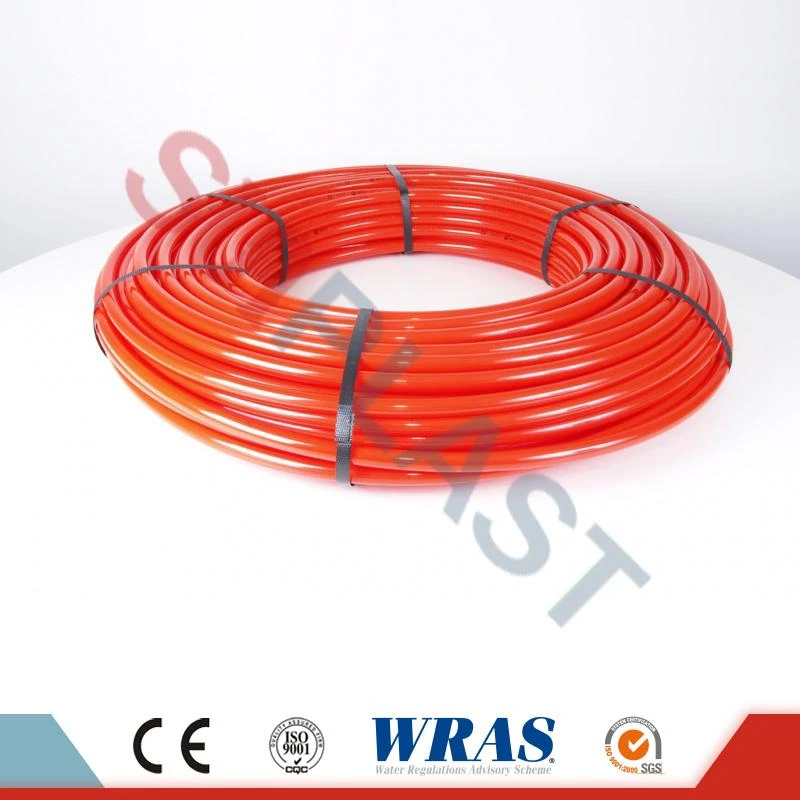
Understanding PEX Pipe for Underfloor Heating
What Is PEX and How Does It Work in Underfloor Heating?
PEX (cross‑linked polyethylene) is manufactured by creating chemical or physical bonds between polyethylene molecular chains, dramatically improving the material’s heat resistance, pressure tolerance, and creep resistance. In a hydronic radiant floor installation, PEX tubing is laid out in evenly spaced loops beneath the floor surface. Warm water from a boiler, heat pump, or other heat source circulates through the tubing, transferring heat upward through the floor finish. The result is even heat distribution, consistent comfort, and clean indoor air—no noisy fans, no dusty ducts.
Sunplast manufactures PEX pipes that meet international standards, with professional in‑process quality controls at every stage—from raw material sourcing to final inspection—ensuring dimensional accuracy, surface finish, thermal stability, and internal hydrostatic pressure compliance.
The Three Main PEX Types — A‑B‑C Comparison
PEX tubing is classified by its cross‑linking method into three main types. Understanding the differences helps contractors and specifiers choose the most suitable PEX pipe for underfloor heating for each project.
| PEX Type | Cross‑linking Method | Cross‑linking Degree | Key Characteristics |
|---|---|---|---|
| PEX‑a | Peroxide (Engel) method | >70% | Highest flexibility; excellent shape memory; kinks repairable with heat gun; lowest bending radius (6× OD) |
| PEX‑b | Silane method | 65%–70% | Moderate flexibility; good cost‑performance balance; higher rigidity than PEX‑a |
| PEX‑c | Electron‑beam irradiation | ~65%–70% | Environmentally friendly process; good purity; moderate flexibility between A and B |
PEX‑a offers the greatest flexibility and is highly kink‑resistant—if a kink occurs, gentle heating with a heat gun can restore it without cutting the pipe. PEX‑b represents the most widely adopted type in mainstream projects due to its balanced performance and cost‑effectiveness. PEX‑c provides an environmentally friendly, additive‑free option suitable for applications where chemical cross‑linking agents are a concern.
Sunplast produces high‑quality PEX‑b pipes using premium raw materials from globally recognized sources, ensuring consistent cross‑linking and reliable performance across a wide range of underfloor heating applications.
Why PEX Outperforms Other Piping Materials
Thermal Efficiency — The Science Behind Lower Bills
Thermal efficiency determines how effectively a heating system converts energy into usable warmth. PEX’s lower thermal conductivity (approximately 0.35–0.38 W/m·K) is not a drawback—it is a deliberate engineering advantage. Unlike metal pipes that rapidly transfer heat to the pipe wall, PEX maintains a stable thermal envelope around the water inside, creating slow‑release radiant warmth that spreads evenly across the floor surface.
A typical 2,000 sq ft home might save $100–$200 annually in heating costs by choosing PEX over metal piping due to dramatically reduced energy loss and optimized heat transfer. PEX tubing paired with high‑efficiency boilers or heat pumps can reduce energy use by 15 to 30 percent compared to traditional forced‑air or radiator systems.
Installation Advantages — Flexibility, Long Coils, and Fewer Joints
Traditional copper or steel pipes require numerous joints and fittings, each a potential leak point. PEX tubing is supplied in long continuous coils (Sunplast offers various coil lengths to suit project requirements), allowing installers to run seamless loops that virtually eliminate connections within the floor slab.
| Installation Attribute | PEX Pipe | Metal Pipe (Copper/Steel) |
|---|---|---|
| Joints/connections | Minimal (only at manifold ends) | Numerous (every bend and turn) |
| Bending radius | Small (6×–8× OD) | Large, requires fittings for direction changes |
| Corrosion resistance | Excellent (no scaling or pitting) | Susceptible to corrosion in oxygenated water |
| On‑site handling | Lightweight coils; easy to carry | Heavy straight lengths; requires cutting tools |
Durability and Longevity — A System Built to Last
PEX tubing is highly resistant to corrosion, scale buildup, and chlorine damage. Industry sources indicate that properly installed PEX systems can last 40 to 50 years with minimal upkeep, and some plastic piping systems have demonstrated lifespans of 100 years or longer.
Sunplast maintains stringent quality control throughout production. Finished products undergo final testing that includes density, melt flow rate, longitudinal reversion, tensile strength, elongation at break, thermal stability, and internal hydrostatic pressure testing. Each product must pass these strict internal checks before release, certified under ISO9001:2000 guidelines.
The Critical Role of EVOH Oxygen Barrier in PEX Pipe for Underfloor Heating
Approximately 95% of all underfloor heating piping in Europe includes an EVOH (ethylene vinyl alcohol copolymer) oxygen barrier layer. This five‑layer construction—inner PEX layer, adhesive, EVOH barrier, adhesive, and protective outer layer—prevents atmospheric oxygen from penetrating the pipe wall and oxidizing metal system components such as boilers, pumps, manifolds, and valves.
EN ISO 15875 and DIN 4726 define the requirements for EVOH oxygen barrier pipes used in underfloor heating systems.
Sunplast’s PEX pipe for underfloor heating meets these international standards, with oxygen barrier construction that protects the entire heating circuit from corrosion and extends system service life. The company holds CE certifications for its multilayer pipes and operates a professional testing laboratory recognized by national testing organizations.
PEX Pipe Underfloor Heating — Market Trends and Specifications
Global Adoption and Regional Preferences
The European Union leads global PEX pipe consumption, with Northern and Central European countries historically representing the most concentrated demand due to their strong traditions of hydronic floor heating and high building standards. However, Southern and Eastern European markets are exhibiting significant growth potential, driven by housing modernization and gradual adoption of more efficient heating solutions.
In the United States, approximately 33% of commercial constructions now utilize advanced underfloor heating pipe systems, with healthcare and retail sectors accounting for 28% and 25% of market usage respectively.
Key market trends include:
- Increasing smart heating integration — 36% of new installations
- PEX pipe preference — 46% of specifiers choose PEX over alternatives
- Growing retrofit applications — 30% of demand comes from renovation projects
Technical Specifications — What to Look For in Quality PEX Pipe
When evaluating PEX pipe for underfloor heating from any manufacturer, industry standards provide clear benchmarks for quality and performance.
| Parameter | Typical Specification |
|---|---|
| Standard compliance | EN ISO 15875, DIN 4726 |
| Application class | Class 4 (underfloor heating) |
| Maximum working temperature | 95°C (continuous) |
| Maximum operating pressure | 8–10 bar |
| Oxygen permeability | ≤0.1 g/m³·day (per DIN 4726) |
| Thermal conductivity | 0.35–0.38 W/m·K |
| Cross‑linking degree (PEX‑b) | ≥65% |
Sunplast’s manufacturing capabilities include world‑advanced extrusion lines featuring high production efficiency, great stability, and fully automatic memory functions—all of which contribute to the consistent dimensional accuracy and material homogeneity required for reliable underfloor heating performance.
Frequently Asked Questions (FAQ)
Q1: Can I use any PEX pipe for underfloor heating, or does it require a special type?
Not all PEX pipes are suitable for underfloor heating systems. Standard potable water PEX lacks an oxygen barrier, which allows atmospheric oxygen to diffuse through the pipe wall and corrode metal system components (boilers, pumps, valves, manifolds). For closed-loop hydronic heating systems, you must use PEX pipe with an EVOH oxygen barrier meeting DIN 4726 standards. Approximately 95% of underfloor heating installations in Europe use EVOH barrier pipes to ensure long‑term system reliability and prevent premature component failure. Additionally, the pipe should be rated for Class 4 application per EN ISO 15875, which specifies performance requirements for underfloor heating systems operating at typical temperatures up to 95°C.
Sunplast manufactures oxygen‑barrier PEX pipes that comply with both EN ISO 15875 and DIN 4726, making them fully suitable for underfloor heating applications.
Q2: How does PEX pipe compare with PERT pipe for underfloor heating?
PEX (cross‑linked polyethylene) and PERT (polyethylene of raised temperature resistance) are both widely used in underfloor heating, but they have distinct differences. PEX achieves its heat resistance through molecular cross‑linking (chemical or physical bonds between polymer chains), resulting in higher creep resistance and dimensional stability at elevated temperatures. PEX typically offers superior long‑term hydrostatic strength and is often preferred for commercial projects or systems with higher operating temperatures. PERT, by contrast, does not require cross‑linking. It relies on a specialized molecular architecture (ethylene‑octene or ethylene‑hexene copolymer) to achieve thermal stability. PERT is generally softer and more flexible than PEX‑b, making it slightly easier to lay in the field. PERT also offers the advantage of heat‑fusion welding, meaning a damaged section can be repaired with a heat welding tool—something that cannot be done with PEX.
In practical terms, both materials deliver excellent service life. However, PEX tends to be favored for higher‑temperature systems and applications requiring superior creep resistance, while PERT is often preferred for residential projects where thermal fusion repair capability is valued. Both perform exceptionally well when manufactured with quality standards and proper installation practices.
Q3: What is the expected lifespan of PEX pipe in an underfloor heating system, and what factors affect it?
A properly manufactured and correctly installed PEX pipe in an underfloor heating system can be expected to last 40 to 50 years, and many industry sources suggest plastic piping systems can achieve 100 years or more under normal operating conditions. However, several factors directly influence actual service life:
| Factor | Impact on Lifespan |
|---|---|
| Operating temperature | Continuous operation near or above the rated maximum (95°C) accelerates material aging |
| Oxygen barrier integrity | Without proper EVOH barrier, oxygen ingress leads to corrosion of metal components, compromising the entire system |
| UV exposure | PEX pipes degrade when exposed to direct sunlight during storage or installation; UV‑resistant packaging or rapid covering is essential |
| Installation quality | Kinking, over‑bending below the minimum radius, or abrasive contact with sharp edges reduces mechanical strength |
| Water chemistry | Highly chlorinated water or aggressive pH levels can contribute to long‑term degradation |
Quality control is paramount. Sunplast implements strict in‑process inspections and final testing—including tensile strength, elongation at break, thermal stability, and internal hydrostatic pressure tests—to ensure every coil meets or exceeds international standards before leaving the factory.
Conclusion — Why PEX Pipe Continues to Lead Underfloor Heating
The evidence is compelling: PEX tubing offers the ideal combination of flexibility, durability, thermal efficiency, corrosion resistance, and long service life required for modern hydronic underfloor heating systems. From new residential construction and commercial buildings to retrofit projects in older homes, PEX pipe for underfloor heating has become the default specification for engineers, contractors, and homeowners seeking reliable, energy‑efficient radiant comfort.
As market demand continues to grow—with the commercial underfloor heating pipe market projected to expand at a CAGR of 8.2% through 2035—choosing a trusted manufacturing partner becomes increasingly important.
Sunplast brings more than 15 years of focused plastic piping experience, ISO9001:2000 certified quality systems, CE certification for PEX multilayer pipes, and a global export footprint spanning more than 30 countries. With three advanced manufacturing workshops, professional in‑house testing laboratories, and a commitment to top‑quality raw materials, Sunplast delivers PEX pipes that meet the highest international standards for underfloor heating applications.
Previous:No News