- English
- Español
- Português
- русский
- Français
- 日本語
- Deutsch
- tiếng Việt
- Italiano
- Nederlands
- ภาษาไทย
- Polski
- 한국어
- Svenska
- magyar
- Malay
- বাংলা ভাষার
- Dansk
- Suomi
- हिन्दी
- Pilipino
- Türkçe
- Gaeilge
- العربية
- Indonesia
- Norsk
- تمل
- český
- ελληνικά
- український
- Javanese
- فارسی
- தமிழ்
- తెలుగు
- नेपाली
- Burmese
- български
- ລາວ
- Latine
- Қазақша
- Euskal
- Azərbaycan
- Slovenský jazyk
- Македонски
- Lietuvos
- Eesti Keel
- Română
- Slovenski
- मराठी
- Srpski језик

How to Prevent Installation Mistakes That Reduce HDPE Pipe Performance?
Introduction
In modern water supply, drainage, gas distribution, and industrial fluid transport systems, HDPE Pipe has become a preferred solution due to its flexibility, corrosion resistance, and long service life. However, even the highest-grade materials can fail prematurely if installation errors occur. Many performance issues reported in the field are not caused by product quality, but by improper handling, jointing, trench preparation, or environmental misjudgment during installation.
At Ningbo Sunplast Pipe Co., Ltd., we have supported global infrastructure projects for decades, and our experience shows that correct installation is as critical as material selection. Our factory focuses not only on producing consistent HDPE Pipe products, but also on guiding clients toward best installation practices that protect long-term system performance. This article explains how to prevent installation mistakes that reduce HDPE Pipe performance, using practical field knowledge, technical parameters, and structured guidance aligned with local engineering standards.

Table of Contents
- What Installation Factors Most Commonly Reduce HDPE Pipe Performance?
- Why Does Improper Jointing Cause Long Term System Failures?
- How Can Trench Preparation and Backfilling Protect Pipe Integrity?
- How Do Environmental and Handling Errors Affect HDPE Pipe Lifespan?
- Conclusion
- FAQ
What Installation Factors Most Commonly Reduce HDPE Pipe Performance?
Understanding the root causes of installation-related failures is the first step in prevention. Based on project feedback handled by Ningbo Sunplast Pipe Co., Ltd., the most common issues are directly linked to human factors rather than material defects. HDPE Pipe is engineered to withstand internal pressure, ground movement, and chemical exposure. However, performance declines rapidly when installers ignore basic mechanical and thermal principles.
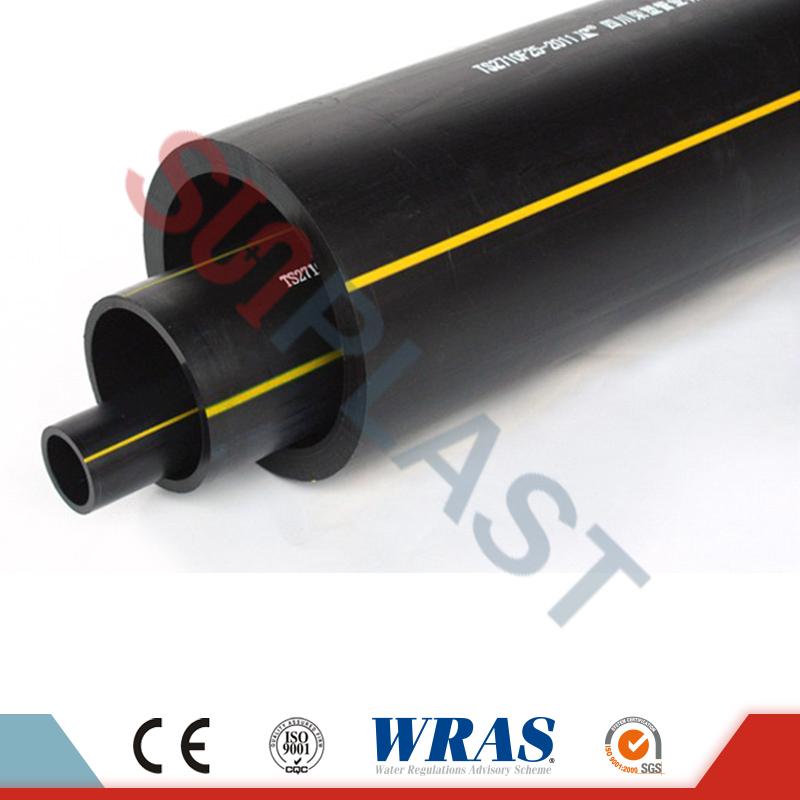
The most frequent installation mistakes include:
- Incorrect pipe alignment during jointing
- Inadequate trench width and uneven bedding
- Overheating or underheating during fusion welding
- Improper backfilling material containing sharp stones
- Failure to account for thermal expansion and contraction
From our perspective, many of these problems arise because installation teams underestimate the flexibility of HDPE Pipe and treat it like rigid materials. Our factory designs products with controlled melt flow index and density, but field conditions must respect those properties.
Below is a reference table outlining key product parameters that directly influence installation performance.
| Material Grade | PE100 |
| Density | 0.955 g per cubic centimeter |
| Standard Dimension Ratio | SDR 11 to SDR 26 |
| Operating Temperature Range | Minus 40 to 60 degrees Celsius |
| Jointing Method | Butt fusion and electrofusion |
These parameters define how HDPE Pipe behaves during installation. Ignoring them often leads to stress concentration, ovality, or micro-cracks that compromise system reliability.
Why Does Improper Jointing Cause Long Term System Failures?
Jointing quality determines whether an HDPE Pipe system performs reliably for decades or fails prematurely. In our experience at Ningbo Sunplast Pipe Co., Ltd., joint-related issues account for a significant portion of leakage and pressure loss complaints. HDPE Pipe relies on homogeneous fusion joints that become as strong as the pipe wall itself. When jointing parameters are incorrect, the fusion zone becomes the weakest point in the system.
Common jointing mistakes include:
- Incorrect heating plate temperature
- Insufficient heating or soaking time
- Contaminated pipe ends with dust or moisture
- Misalignment during fusion cooling
Our factory specifies precise fusion parameters based on pipe diameter and SDR. When installers deviate from these values, molecular bonding in the joint becomes incomplete. Over time, internal pressure cycles and soil movement amplify these weaknesses. Another overlooked issue is cooling time. HDPE Pipe joints must cool naturally without external stress. Premature movement introduces residual stress that remains locked in the joint for years.
To avoid jointing failures, our recommended practices include:
- Using calibrated fusion equipment
- Cleaning and aligning pipe ends before heating
- Following manufacturer-specific fusion charts
- Allowing full cooling time before handling
By respecting these steps, installers preserve the designed pressure rating and fatigue resistance of HDPE Pipe, ensuring long-term system stability.
How Can Trench Preparation and Backfilling Protect Pipe Integrity?
Trench conditions directly affect HDPE Pipe performance throughout its service life. Unlike rigid pipes, HDPE Pipe interacts with surrounding soil to distribute loads. This makes proper trench preparation essential. At Sunplast, we often emphasize that pipe failure blamed on material is frequently caused by uneven bedding or poor backfill practices.
Key trench preparation principles include:
- Uniform trench bottom without sharp projections
- Adequate trench width to allow side support
- Stable bedding layer using fine granular material
Improper bedding creates point loads on the pipe wall. Over time, these stress points can deform HDPE Pipe, reducing hydraulic efficiency and structural safety.
Backfilling is equally critical. The initial backfill zone surrounding the pipe should:
- Be free of stones and construction debris
- Be compacted evenly in layers
- Provide lateral support without excessive pressure
Our factory recommends controlled compaction rather than aggressive mechanical compaction directly above HDPE Pipe. This approach allows the pipe to maintain its circular shape while achieving optimal soil-pipe interaction. Correct trench and backfill practices protect HDPE Pipe from external loads, ground settlement, and long-term deformation, preserving flow capacity and joint integrity.
How Do Environmental and Handling Errors Affect HDPE Pipe Lifespan?
Environmental exposure and handling errors during installation can significantly reduce HDPE Pipe lifespan. While HDPE Pipe is designed for durability, improper storage and handling introduce avoidable risks.
Common environmental and handling mistakes include:
- Prolonged exposure to direct sunlight without protection
- Dragging pipes over rough surfaces
- Dropping pipes from transport vehicles
- Installing pipes at extreme temperatures without adjustment
Our factory produces HDPE Pipe with UV stabilizers, but long-term unprotected exposure before installation can still degrade surface properties. Surface scratches caused by rough handling may become initiation points for stress cracking. Temperature also plays a major role. HDPE Pipe becomes stiffer in cold environments and more flexible in hot conditions. Installation procedures must adapt accordingly, including fusion timing and bending radius control.
At Ningbo Sunplast Pipe Co., Ltd., our guidance emphasizes:
- Proper storage on flat supports
- Using lifting equipment instead of dragging
- Adjusting installation methods based on ambient temperature
By managing environmental and handling factors, installers protect the designed mechanical properties of HDPE Pipe and extend its operational life.
Conclusion
Preventing installation mistakes that reduce HDPE Pipe performance requires a combination of technical understanding, disciplined procedures, and respect for material behavior. From jointing accuracy to trench preparation and environmental management, every step influences long-term system reliability. Ningbo Sunplast Pipe Co., Ltd. combines consistent product quality with practical installation insight developed through years of project experience. Our factory supports clients not only with reliable HDPE Pipe solutions, but also with technical guidance that minimizes risk and maximizes return on investment.
If you are planning a new pipeline project or upgrading an existing system, choosing the right installation approach is as important as choosing the right supplier. Contact our team to discuss how our HDPE Pipe products and technical support can help you achieve durable, efficient, and cost-effective pipeline performance.
FAQ
Q1: How to Prevent Installation Mistakes That Reduce HDPE Pipe Performance?
Preventing mistakes requires correct jointing parameters, proper trench preparation, controlled backfilling, and careful handling to protect material integrity throughout installation.
Q2: How to Prevent Installation Mistakes That Reduce HDPE Pipe Performance in fusion welding?
Use calibrated fusion equipment, follow manufacturer-recommended temperatures and heating times, and allow joints to cool naturally without external stress.
Q3: How to Prevent Installation Mistakes That Reduce HDPE Pipe Performance related to soil conditions?
Ensure uniform bedding, remove sharp objects, and use fine granular backfill material to provide even support and reduce point loads on the pipe wall.
Q4: How to Prevent Installation Mistakes That Reduce HDPE Pipe Performance in extreme temperatures?
Adjust installation techniques based on ambient temperature, including fusion timing and bending radius, to maintain proper material behavior.
Q5: How to Prevent Installation Mistakes That Reduce HDPE Pipe Performance during storage and handling?
Store pipes on flat supports, protect them from prolonged sunlight exposure, avoid dragging or dropping, and use appropriate lifting methods during transport and installation.