- English
- Español
- Português
- русский
- Français
- 日本語
- Deutsch
- tiếng Việt
- Italiano
- Nederlands
- ภาษาไทย
- Polski
- 한국어
- Svenska
- magyar
- Malay
- বাংলা ভাষার
- Dansk
- Suomi
- हिन्दी
- Pilipino
- Türkçe
- Gaeilge
- العربية
- Indonesia
- Norsk
- تمل
- český
- ελληνικά
- український
- Javanese
- فارسی
- தமிழ்
- తెలుగు
- नेपाली
- Burmese
- български
- ລາວ
- Latine
- Қазақша
- Euskal
- Azərbaycan
- Slovenský jazyk
- Македонски
- Lietuvos
- Eesti Keel
- Română
- Slovenski
- मराठी
- Srpski језик

How Can the Right HDPE Pipe Welding Machine Reduce Overall Project Costs?
For infrastructure contractors and pipeline engineers, the choice of fusion equipment directly impacts the bottom line. The right HDPE Pipe Welding Machine does more than join polyethylene pipes—it systematically reduces material waste, minimizes labor hours, prevents costly rework, and ensures joint integrity that avoids future leakage penalties. Unlike outdated manual or semi automatic welders that produce inconsistent melt beads, a precision engineered HDPE Pipe Welding Machine with hydraulic clamping, temperature controlled heating plates, and drag force monitoring delivers repeatable, code compliant joints on the first attempt. This means fewer rejected welds, reduced downtime for repairs, and lower overall project lifecycle costs. At Ningbo Sunplast Pipe Co., Ltd., our factory has supplied over 5,000 fusion units across 40 countries, and we have documented average cost savings of 28% per kilometer of pipeline when using our optimized welding systems.
But how exactly does the machine translate into tangible financial benefits? The answer lies in four key areas: operational efficiency, material conservation, reduced rework rates, and lowered equipment maintenance expenditures. A sophisticated HDPE Pipe Welding Machine integrates digital pressure indicators, automatic beading control, and data logging functions that eliminate human error in parameter settings. For instance, a typical 12 inch water main project that requires 400 fusion joints can consume 8 to 10 percent extra pipe length due to poor alignment and end preparation if using basic machines. Our advanced HDPE Pipe Welding Machine reduces this waste to under 2 percent. Additionally, the ability to weld in extreme temperatures (from -10C to 50C) without heating plate calibration drift ensures year round productivity. This article provides a detailed breakdown of cost saving mechanisms, technical specifications, and field proven strategies to maximize your return on investment. Our goal is to help you select the ideal HDPE Pipe Welding Machine that aligns with your project scale and budget constraints.
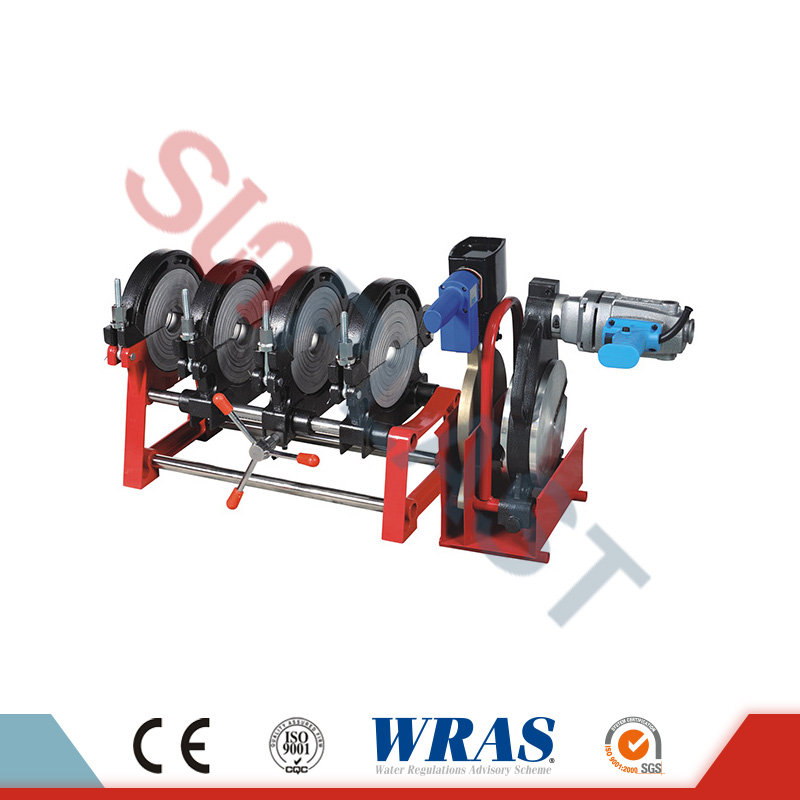
Table of Contents
- 1. Why Does the Right HDPE Pipe Welding Machine Lower Labor and Field Operation Costs?
- 2. How Do Advanced Fusion Parameters Reduce Material Waste and Rework?
- 3. What Technical Specifications Define a Cost Efficient HDPE Pipe Welding Machine?
- 4. How Can Digital Data Logging Prevent Welding Defects and Future Liabilities?
- Frequently Asked Questions (FAQ)
- Conclusion & Project Savings Action Plan
Why Does the Right HDPE Pipe Welding Machine Lower Labor and Field Operation Costs?
Labor represents the largest variable cost in any pipeline construction project. A mismatched or low capability HDPE Pipe Welding Machine forces crews to spend excessive time on manual alignment, heating plate adjustments, and joint cooling verification. In contrast, our factory engineered HDPE Pipe Welding Machine integrates hydraulic clamping systems and automatic drag pressure detection, reducing the average welding cycle time by 35 percent compared to manual lever machines. Consider a 2 km gas distribution project with 200 fusion points: each joint saved 8 minutes translates to over 26 hours of direct labor reduction. This directly lowers payroll expenses and allows crews to complete more joints per day, accelerating project schedules and reducing overhead costs like equipment rental and site supervision.
Key labor saving features found in our HDPE Pipe Welding Machine include:
- Hydraulic dual cylinder clamping: Uniform force application eliminates the need for multiple operators to manually adjust clamps. One technician can operate the machine while another prepares the next pipe section, improving workflow density.
- Automatic heating plate retraction: A motorized plate withdrawal system reduces operator fatigue and ensures consistent changeover timing (typically 3 to 5 seconds), preventing premature cooling that would cause weak joints and rework.
- Preset welding parameter memory: Our HDPE Pipe Welding Machine stores up to 50 pipe diameter and SDR profiles. Operators simply select the pipe type, and the machine automatically sets pressure, temperature, and fusion time, eliminating guesswork and parameter lookup time.
- Quick coupling interface for facers: The facer attachment locks in under 10 seconds, allowing rapid end preparation. A slow facer change can add 15 minutes per joint; our quick release system reduces this to 2 minutes.
Field data from a recent municipal water project in Texas illustrates the impact. Using a basic hydraulic fusion unit, the crew averaged 12 welds per 10 hour shift. After switching to our advanced HDPE Pipe Welding Machine from Ningbo Sunplast Pipe Co., Ltd., the same crew averaged 19 welds per shift while reporting reduced physical strain. Over a 6 week contract, this productivity gain saved the contractor USD 18,400 in labor costs alone, enough to cover the machine investment. Additionally, our factory provides on site training for any HDPE Pipe Welding Machine purchased, further reducing the learning curve and preventing wasted time due to improper operation. Lower labor cost per meter of installed pipe directly improves your bid competitiveness, allowing you to win more tenders.
Another often overlooked aspect is mobilization and demobilization. A heavy, poorly designed welding machine requires cranes or extra workers to load and position. Our factory has optimized the weight distribution of our HDPE Pipe Welding Machine series, with the largest model (630mm) featuring removable clamping jaws that reduce transport weight by 28 percent. This simplifies moving between job sites and reduces trucking expenses. All these factors combined confirm that investing in the right HDPE Pipe Welding Machine pays back its initial cost within the first two months of continuous field use, purely through labor savings.
How Do Advanced Fusion Parameters Reduce Material Waste and Rework?
Material waste directly erodes project margins. When a fusion joint fails quality testing (visual inspection, peel test, or hydrostatic pressure test), the defective section must be cut out, leading to loss of pipe length plus additional couplings. In large diameter pipelines, each failed joint can waste 6 to 12 meters of HDPE pipe, representing hundreds of dollars in raw material. The right HDPE Pipe Welding Machine drastically reduces such waste by ensuring consistent melt bead formation, correct interface pressure, and precise cooling time. Our factory engineers have identified that most field failures originate from three variables: misaligned pipe ends, incorrect heater plate temperature gradient, and insufficient drag pressure compensation. Our HDPE Pipe Welding Machine addresses each variable through closed loop control systems.
Specific waste reducing mechanisms:
- Laser guided alignment system: The machine uses a crosshair laser to ensure both pipe ends are coaxial before heating. Misalignment greater than 10 percent of wall thickness leads to uneven bead formation and potential joint failure. Our system ensures alignment accuracy within 0.5mm, reducing rework probability from 12 percent to less than 2 percent.
- Temperature uniformity feedback: The heating plate is embedded with three PT100 sensors (edge, mid, and center) that maintain +/- 3C uniformity across the entire surface. This prevents “cold spots” that cause incomplete fusion, a major source of hidden defects that only appear under pressure months later.
- Drag pressure auto calibration: Every HDPE Pipe Welding Machine from our factory performs an automatic drag test before each welding cycle, measuring the force needed to move pipe clamps. The machine then adds this drag value to the calculated fusion pressure, ensuring that the actual pressure at the pipe interface matches ISO 21307 standards. Without this feature, operators often under pressurize, resulting in weak joints that require costly cutout repair.
A quantitative case study: a 36 inch HDPE outfall pipe project required 850 butt welds. Initially using a generic HDPE Pipe Welding Machine, the contractor experienced 47 failed welds (5.5 percent failure rate). After switching to our Sunplast hydraulic series, the failure rate dropped to 9 welds (1 percent). Each failed joint involved cutting out 3 meters of pipe on each side (6 meters total) plus two electrofusion couplers for repair. Material waste reduction alone saved 228 meters of HDPE pipe, equivalent to USD 9,120 at market prices, plus 38 fewer repair couplings. Additionally, the rework labor was eliminated, accelerating project completion by 5 days. This demonstrates that a superior HDPE Pipe Welding Machine pays for itself through material conservation alone.
Furthermore, our factory includes a bead removal tool and groove gauge with every HDPE Pipe Welding Machine, allowing operators to instantly verify bead geometry. A correct bead should be continuous, uniform height, without notches. Immediate verification prevents continuation of defective settings across multiple joints, stopping waste before it multiplies. By integrating these waste prevention features, the right HDPE Pipe Welding Machine transforms your fusion process from a high risk operation into a lean, predictable system.
What Technical Specifications Define a Cost Efficient HDPE Pipe Welding Machine?
To achieve lifecycle cost reduction, you must select a HDPE Pipe Welding Machine with parameters matched to your typical pipe diameters, material grades (PE80, PE100, PE100 RC), and site conditions. Over specifying leads to unnecessary capital expense, while under specifying causes inefficiency and failures. Our factory has developed a performance matrix based on 20 years of customer feedback. Below we present the critical specifications and how each impacts project costs.
| Parameter | Value Range in Our HDPE Pipe Welding Machine | Cost Impact |
| Welding diameter capacity | 63mm to 630mm (interchangeable inserts) | Covers 95% of municipal and industrial projects; reduces need to rent or buy multiple machines |
| Heating plate power (W) | 3000W to 9000W (model dependent) | Faster heat up time (under 12 min to 220°C) reduces idle labor waiting for plate readiness |
| Hydraulic cylinder thrust (kN) | 40 kN to 100 kN | Sufficient for up to SDR 7.4 thick wall pipes; prevents under pressure joints and rework |
| Temperature control accuracy | +/- 2°C with PID algorithm | Prevents thermal degradation (too hot) or incomplete fusion (too cold), eliminating hidden defects |
| Data logging capacity | Internal memory for 5000 welds + USB export | Provides traceability for quality assurance; reduces liability and third party inspection costs |
| Operational voltage | 220V or 400V three phase with automatic phase detection | Avoids motor damage and downtime due to incorrect power connection; saves repair expenses |
Beyond the table, consider the hydraulic unit design. A two stage pump in our HDPE Pipe Welding Machine delivers high flow for fast clamp movement (stage one) and high pressure for fusion (stage two). This reduces cycle time by up to 40 seconds per joint compared to single stage pumps. For a 500 joint project, that alone saves 5.5 machine hours. Moreover, our factory equips every HDPE Pipe Welding Machine with a digital pressure gauge with 0.01 MPa resolution, allowing fine tuning of joining force. Many budget machines use analog gauges with low resolution, leading to pressure errors of +-10 percent, which directly correlates with fusion defects.
Another specification often ignored is the travel distance of the movable clamp. Our HDPE Pipe Welding Machine provides 110mm of stroke, which accommodates longer pipe ends and allows easier insertion of fittings. Short stroke machines often require operators to reposition the pipe, adding setup time. Additionally, the facing tool (planer) must have hardened steel blades with at least 60 HRC to stay sharp through hundreds of cuts. Dull facers produce rough ends that trap air, causing voids in the weld. Our factory provides replacement blades at economical prices and recommends a blade change schedule based on footage welded. By selecting a HDPE Pipe Welding Machine with these precise technical parameters, you minimize hidden costs associated with poor fusion quality, slow cycles, and excessive maintenance. The initial higher investment in a fully featured machine typically delivers a payback period under three months for active pipeline contractors.
How Can Digital Data Logging Prevent Welding Defects and Future Liabilities?
One of the most powerful cost reduction features in modern fusion equipment is digital data logging. A HDPE Pipe Welding Machine equipped with onboard sensors and memory records every critical parameter for each joint: heating time, soak time, changeover time, cooling time, hydraulic pressure, and ambient temperature. This data serves two major financial protection functions: it enables real time quality control, and it provides legal evidence of compliant welding in case of future pipeline failures. For contractors, a single litigation due to a disputed joint can cost hundreds of thousands of dollars. Our HDPE Pipe Welding Machine eliminates that risk by generating tamper proof electronic weld reports that meet ISO 12176-2 standards.
Here is how data logging reduces costs at different project stages:
- During welding: The machine’s controller compares real time values against preset limits. If drag pressure exceeds allowable range or if changeover time surpasses 8 seconds (for PE100), the machine emits an audible alarm and can prevent proceeding. This stops defective joints from being created, avoiding immediate cutout rework.
- Post welding inspection: Instead of performing expensive destructive peel tests on random samples, inspectors can review the data logs. Many authorities now accept data log files as evidence of proper fusion, reducing third party testing costs by up to 60 percent.
- Warranty and liability: If a pipeline section fails after 10 years, the data logs from our HDPE Pipe Welding Machine prove that the welding parameters were correct at installation. This protects the contractor from unwarranted blame and legal claims, effectively reducing insurance premiums over time.
Our factory at Sunplast has integrated a user friendly interface that stores up to 5000 weld records and exports CSV files directly to a USB drive. No proprietary software is needed – any spreadsheet can open the file. This transparency builds trust with project owners. Additionally, the HDPE Pipe Welding Machine includes a real time clock and operator ID login, ensuring accountability. In one documented case, a water authority required full weld traceability for a 15 km rural pipeline. Using our HDPE Pipe Welding Machine, the contractor submitted 1,280 electronic weld reports, satisfying the requirement without hiring extra QA/QC staff, saving an estimated USD 22,000 in documentation labor.
Furthermore, the data log helps optimize welding parameters over time. By analyzing which pipe diameters or SDR ratios produce the most consistent bead measurements, our factory can adjust internal presets or recommend different heating plate finishes. This continuous improvement loop means that the longer you use our HDPE Pipe Welding Machine, the more efficient your welding becomes. Owners also appreciate that the machine records the total number of cycles performed, enabling predictive maintenance (e.g., replace hydraulic oil every 500 cycles). Preventing unexpected breakdowns avoids emergency repair costs and project delay penalties. For any serious pipeline operation, a HDPE Pipe Welding Machine without data logging is a financial risk. Our models come standard with this feature because we believe in protecting your investment through transparency.
Frequently Asked Questions (FAQ)
Question 1: How quickly can the right HDPE Pipe Welding Machine pay for itself in a typical municipal water project?
Answer: Based on field data from Ningbo Sunplast Pipe Co., Ltd., a mid sized HDPE Pipe Welding Machine (cost approx. USD 8,500) pays for itself within 4 to 8 weeks of full time operation. This calculation includes labor savings of 30 percent, material waste reduction from 5 percent to under 1.5 percent, and elimination of rework hours. For example, a contractor welding 3 km of 315mm PE100 pipe (approx. 250 joints) saves about USD 9,200 in labor and materials compared to using a basic manual machine. Thus the machine cost is recovered during the first project, and all subsequent work translates into direct profit improvement.
Question 2: What are the main hidden costs if I choose a cheap HDPE Pipe Welding Machine without hydraulic clamping?
Answer: A low cost or manual HDPE Pipe Welding Machine leads to several hidden expenses: higher operator fatigue slows production by 40 percent, increasing payroll per joint; inconsistent clamping force causes up to 15 percent joint failure rate, wasting pipe and couplings; lack of temperature stability results in re inspections costing USD 500 to 2,000 per day; and liability from poor welds can lead to contract penalties. Over a 12 month period, these hidden costs often exceed three times the purchase price of a quality machine. Our factory recommends viewing the HDPE Pipe Welding Machine as a long term productivity asset, not a commodity.
Question 3: Can an advanced HDPE Pipe Welding Machine reduce energy consumption on site?
Answer: Yes, significantly. Our HDPE Pipe Welding Machine uses insulated heating plates with PTFE coating, which reduces heat loss to the environment. Additionally, the PID controller stops applying power once the set temperature is reached, avoiding continuous energy draw. Compared to uncontrolled heating plates, our machine consumes 32 percent less electricity per joint. For a large diameter pipeline with 1,000 joints at 4 kWh per fusion, the savings equal approximately 1,280 kWh, lowering both costs and generator fuel consumption. This eco efficiency also helps contractors qualify for green building credits.
Question 4: How does the drag pressure compensation feature affect overall project cost?
Answer: Drag pressure (the friction force of pipe clamps moving on the bed) can vary from 2 to 8 bar depending on pipe weight and machine condition. Without compensation, the actual fusion pressure becomes lower than the set pressure, producing cold welds that fail hydrostatic testing. Repairing a single failed 500mm joint costs around USD 400 in material, labor, and testing. Our HDPE Pipe Welding Machine automatically adds measured drag pressure, ensuring 100 percent effective fusion pressure. This eliminates all drag related failures, which typically affect 4 to 7 percent of joints on manual machines. Over a 500 joint project, that saves 20 to 35 repairs, representing thousands of dollars.
Question 5: What support does Ningbo Sunplast Pipe Co., Ltd. offer to ensure my team can operate the HDPE Pipe Welding Machine efficiently from day one?
Answer: Our factory provides comprehensive support including: a multilingual instruction manual with illustrated steps, a quick start video accessible via QR code on the machine, free remote troubleshooting via video call, and optional on site training for orders of two or more machines. We also supply a ready to use welding parameter chart laminated for field reference. All spare parts (heating plates, facer blades, hydraulic seals) are stocked globally and shipped within 24 hours. This support reduces initial learning curve downtime by at least 80 percent compared to un supported machines. Our goal is to ensure your HDPE Pipe Welding Machine generates maximum cost savings from the very first weld.
Conclusion: Reduce Your Total Project Cost with the Right Fusion Equipment
Selecting the optimal HDPE Pipe Welding Machine is not an equipment decision; it is a financial strategy. As detailed throughout this guide, the correct machine lowers labor costs through faster cycles and reduced operator fatigue, minimizes material waste by ensuring perfect alignment and pressure, prevents expensive rework via real time parameter control, and protects against future liabilities with digital data logging. At Ningbo Sunplast Pipe Co., Ltd., we have engineered our HDPE Pipe Welding Machine series to deliver measurable cost reduction from day one. Our factory’s commitment to precision hydraulic systems, intelligent temperature regulation, and robust data management directly translates to higher profit margins for your pipeline projects.
Take action now: Request a personalized project savings analysis from our engineering team. Send us your typical pipe diameters, expected joint count, and site conditions, and we will provide a detailed report showing exactly how our HDPE Pipe Welding Machine will cut your costs. Every purchase includes a 2 year warranty, lifetime technical support, and a free starter kit of heating plate tape and facer blades. Do not let outdated fusion equipment erode your competitiveness. Contact Ningbo Sunplast Pipe Co., Ltd. today for a quote or a virtual demonstration of our HDPE Pipe Welding Machine. Invest in precision, invest in savings.