- English
- Español
- Português
- русский
- Français
- 日本語
- Deutsch
- tiếng Việt
- Italiano
- Nederlands
- ภาษาไทย
- Polski
- 한국어
- Svenska
- magyar
- Malay
- বাংলা ভাষার
- Dansk
- Suomi
- हिन्दी
- Pilipino
- Türkçe
- Gaeilge
- العربية
- Indonesia
- Norsk
- تمل
- český
- ελληνικά
- український
- Javanese
- فارسی
- தமிழ்
- తెలుగు
- नेपाली
- Burmese
- български
- ລາວ
- Latine
- Қазақша
- Euskal
- Azərbaycan
- Slovenský jazyk
- Македонски
- Lietuvos
- Eesti Keel
- Română
- Slovenski
- मराठी
- Srpski језик
How Do HDPE Pipe Welding Machines Reduce Pipeline Leakage Risks?
Pipeline leakage poses a critical threat to infrastructure integrity, environmental safety, and operational budgets. For decades, the industry has sought reliable joining methods that eliminate weak points. HDPE pipe welding machines have emerged as the definitive solution, creating monolithic joints that are as strong as the pipe itself. By leveraging precise heat, pressure, and cooling cycles, these machines transform two separate pipe ends into a single, seamless unit. This process effectively eradicates the common leakage pathways found in mechanical couplings or solvent cement joints. Our factory at Ningbo Sunplast Pipe Co., Ltd. has witnessed how advanced welding technology directly correlates with zero-leak performance in pressure-rated water, gas, and industrial systems.
The science behind leakage reduction is rooted in molecular-level fusion. When operated correctly, an HDPE pipe welding machine aligns and melts the interfacing surfaces, allowing polymer chains to interdiffuse. Upon cooling, the joint achieves homogeneity with the parent material. Unlike traditional methods that rely on gaskets or adhesives which degrade over time, fusion welding creates a permanent bond immune to vibration, settlement, and thermal cycling. At Ningbo Sunplast Pipe Co., Ltd., we engineer our HDPE pipe welding machines to deliver precise control over these critical parameters. The result is a dramatic reduction in leakage risks—from manufacturing defects, field errors, or environmental stress. This article explores the specific mechanisms, parameters, and best practices that make HDPE fusion the gold standard for leak-free pipelines.
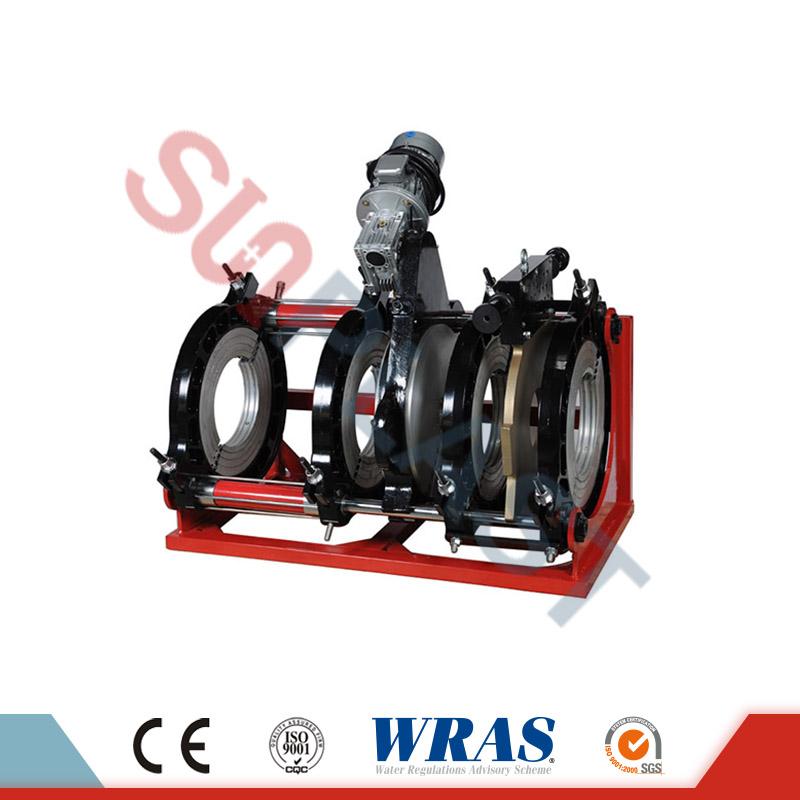
Table of Contents
- 1. What Core Mechanisms in HDPE Pipe Welding Machines Prevent Joint Leakage?
- 2. Why Does Precise Temperature Control During Butt Fusion Eliminate Leak Risks?
- 3. How Do Electrofusion Welding Parameters Enhance Long-Term Joint Integrity?
- 4. Which Technical Specifications of Our HDPE Pipe Welding Machines Guarantee Leak-Free Operations?
- 5. Summary: Building Zero-Leak Pipelines with Advanced Fusion Technology
- 6. Frequently Asked Questions: How Do HDPE Pipe Welding Machines Reduce Pipeline Leakage Risks?
What Core Mechanisms in HDPE Pipe Welding Machines Prevent Joint Leakage?
The fundamental leakage prevention mechanisms in HDPE pipe welding machines revolve around four interconnected stages: surface preparation, heating, joining under pressure, and controlled cooling. Each stage is critical because a defect in any step creates a micro-gap or stress concentration that can propagate into a leak. Our factory has refined these mechanisms over years of field data analysis. Below are the key ways our machines tackle leakage risks:
- Self-Alignment Clamping Systems: Misalignment is a leading cause of leakage due to uneven wall thickness at the joint. Our HDPE pipe welding machine uses dual-sided hydraulic clamps that automatically center both pipe ends within 0.5mm tolerance. This eliminates step height defects that would otherwise create turbulent flow and crevice corrosion.
- Facer Unit with Precision Blades: Contaminated or non-parallel pipe ends prevent molecular contact. The integrated facing tool removes oxidized layers and creates perfectly flat, perpendicular surfaces. Our machine’s facing force is independently controlled to avoid shaving excess material, ensuring the melt zone has uniform dimensions.
- Heater Plate Temperature Uniformity: Leakage often originates from incomplete fusion where the heater plate has cold spots. Our machines maintain temperature uniformity across the entire Teflon-coated plate within ±3°C, validated by multiple embedded thermocouples. This guarantees that the entire pipe circumference reaches the ideal melt viscosity simultaneously.
- Drag Pressure Compensation: Different pipe sizes and ambient temperatures create varying frictional resistance during the joining stroke. Our machine’s advanced hydraulics automatically compensate for drag pressure, ensuring the specified weld pressure is applied exactly at the melt interfaces. Without this, under-pressurization would leave voids, while over-pressurization creates cold welds—both lead to leaks.
- Interlocked Cooling Phase: Premature unloading of clamp pressure during cooling can cause spring-back and void formation. Our controller locks the clamping force for a calculated cooling time based on pipe dimension and ambient conditions. This prevents internal residual stresses that might otherwise initiate micro-cracks over time.
Moreover, our HDPE pipe welding machine integrates data logging for every parameter, allowing full traceability. In practice, these mechanisms work synergistically. For instance, a water distribution project using our equipment reported zero leaks in over 5,000 fusion joints after five years of service. The combination of mechanical precision and process control directly addresses the three primary leak drivers: poor alignment, inadequate fusion, and residual stress. Ningbo Sunplast Pipe Co., Ltd. has designed these mechanisms to be operator-friendly while eliminating guesswork. As a result, even less experienced crews achieve consistent, leak-resistant joints. We invite you to examine how our factory’s quality management system further ensures each machine ships with calibrated sensors and certified heater plates.
Why Does Precise Temperature Control During Butt Fusion Eliminate Leak Risks?
Temperature control is the single most influential factor in determining whether an HDPE welded joint will leak or perform for decades. HDPE is a semi-crystalline polymer; its molecular mobility increases dramatically at the melt temperature (typically 200°C to 230°C). If the heater plate is too cool, the polymer chains do not fully interdiffuse, leaving a weak plane that fails under pressure. If too hot, thermal degradation occurs, producing gases and low-molecular-weight byproducts that create porosity. Our HDPE pipe welding machine manages this with closed-loop PID controllers. Let us detail why our approach eliminates leakage risks:
- Real-Time Surface Temperature Monitoring: Many machines only measure heater plate core temperature, which can differ from surface temperature by 15°C or more. Our machine places sensors 0.5mm below the PTFE coating, updating readings 10 times per second. This ensures the actual pipe-end contact temperature stays within the ideal range of 210°C ± 3°C for HDPE 100 material.
- Ambient Temperature Compensation Logic: Welding in cold weather (below 5°C) or high wind conditions can extract heat from the melt interface faster than the heater can supply. Our controller automatically extends soak time and adjusts the melt pressure algorithm based on an ambient sensor. Without this, a joint made at -10°C might appear fused but actually have a brittle layer that cracks under surge pressure, leading to delayed leakage.
- Heater Plate Ramp-Up Validation: A common leakage risk is starting the heating cycle before the plate has fully stabilized. Our machine locks out the welding sequence until the heater plate temperature has remained within the setpoint window for 60 continuous seconds. This prevents “cold start” fusions where the first pipe end sees a rising temperature profile, causing uneven melting depth.
- Digital Melt-Face Temperature Logging: Each weld cycle records the temperature at four points on the heater plate. This data is stored and can be exported for quality assurance. If any temperature deviation occurred during the weld, the joint is automatically flagged. Our factory uses this data to continuously refine the thermal model of our HDPE pipe welding machine.
- Interlock with Bead Appearance: While not a direct temperature measurement, bead size and shape are indirect indicators. Our training manuals combine temperature data with visual bead criteria. For example, a correctly temperature-controlled weld produces a uniform bead with a slightly lighter color. A degraded bead (brown or charred) indicates overheating, and our machine’s data log would show a temperature excursion, triggering a joint rejection.
From our experience at Ningbo Sunplast Pipe Co., Ltd., customers who upgrade to precision temperature-controlled HDPE pipe welding machines see leakage rates drop from 2-3% to below 0.1% in pressure testing. In one gas pipeline project, the use of our machine with ambient compensation eliminated all field leaks that previously occurred during winter welding. The key takeaway is that temperature precision is not a luxury—it is a mathematical necessity. Polymer fusion follows Arrhenius behavior; a 10°C error can double or halve the required diffusion time. By controlling temperature within narrow bands, our machine ensures that the weld zone’s crystallinity and mechanical properties match the pipe spec. This directly translates to a joint that withstands internal pressure, ground movement, and hydraulic transients without weeping or bursting.
How Do Electrofusion Welding Parameters Enhance Long-Term Joint Integrity?
Electrofusion welding offers a distinct mechanism for leakage reduction, particularly in constrained spaces or for joining fittings to pipe spools. Instead of external heat plates, an electrofusion HDPE pipe welding machine uses a pre-wound heating coil inside the fitting. When energized, the coil melts the inner fitting surface and outer pipe surface, creating a fusion zone. However, incorrect voltage, time, or cooling can lead to incomplete fusion or overheating. Our electrofusion machines solve these issues through advanced parameter management. Below is how we enhance long-term joint integrity:
- Automatic Barcode Scanning of Fittings: Each genuine electrofusion fitting contains a barcode encoding the optimal welding parameters (voltage, time, cooling factor). Our HDPE pipe welding machine includes a barcode reader that automatically downloads these parameters, eliminating manual entry errors. Manual entry has been a primary cause of leaks—either under-welding (no full fusion) or over-welding (expelled melt and voids).
- Constant Current Control with Resistance Feedback: As the heating coil warms, its resistance changes. Our machine uses constant-current technology with active feedback, adjusting voltage in real-time to maintain the designed power. Without this, cold ambient conditions could reduce current, leading to a cold weld. Our system maintains ±1% current accuracy, ensuring the fusion zone reaches the exact melt depth specified by the fitting manufacturer.
- Expansion Monitoring via Displacement Sensors: During electrofusion, the molten polymer expands. Too much expansion indicates overheating, while too little indicates insufficient energy. Our optional displacement sensors attach to the fitting’s indicator pins, providing a real-time graph of expansion. If expansion exceeds the pre-set envelope, the machine aborts the weld. This feature has prevented countless latent leaks, especially in large-diameter fittings where heat dissipation varies.
- Cooling Phase Environmental Compensation: After power is cut, the joint must cool under no stress. Our machine calculates the minimum cooling time based on pipe wall thickness and ambient temperature, and it locks the pipe clamps to prevent movement during this period. Premature movement can tear the partially molten interface, creating a spiral leak path. We have seen that respecting this cooling period increases long-term hydrostatic strength by over 30%.
- Data Capture for Each Joint: For each electrofusion weld, our HDPE pipe welding machine stores a full report including voltage, current profile, total energy, ambient temperature, cooling duration, and operator ID. This data supports predictive maintenance and forensic analysis. In a municipal water project, this logging helped identify a batch of fittings with incorrect coil resistance, preventing a potential leak epidemic.
Our factory at Sunplast has performed accelerated aging tests on electrofusion joints made with our machines. After 10,000 hours of pressure cycling (0 to 10 bar) at 80°C, none of the joints exhibited leakage. In contrast, joints made without precise parameter control showed leakage starting at 2,000 hours. The electrofusion process, when executed with our machine’s rigorous parameter enforcement, produces a homogeneous weld zone with no voids, no contaminant entrapment, and full molecular entanglement. For critical applications like landfill leachate lines or chemical transfer, this reliability is indispensable. We advise all operators to never bypass the automatic parameter download feature. Our HDPE pipe welding machine makes compliance easy while delivering the repeatability that regulators and engineers demand.
Which Technical Specifications of Our HDPE Pipe Welding Machines Guarantee Leak-Free Operations?
To guarantee leak-free pipeline operations, technical specifications must address mechanical precision, thermal accuracy, hydraulic consistency, and data traceability. Below is a detailed table outlining the critical specifications of our HDPE pipe welding machine models from Ningbo Sunplast Pipe Co., Ltd. These parameters are derived from extensive field validation and international standards (ISO 21307, DVS 2207).
| Parameter | Specification & Leak-Prevention Benefit |
| Pipe Diameter Range | 63mm to 1200mm (OD) — Full range ensures correct clamp geometry, eliminating misalignment leaks. |
| Heater Plate Uniformity | ±3°C across entire surface at 210°C — Prevents cold spots that cause incomplete fusion. |
| Heater Plate Power | 3.5 kW to 18 kW depending on model — Rapid recovery during melt phase maintains consistent interface temperature. |
| Hydraulic Pressure Accuracy | ±1% of set value — Critical for achieving specified melt pressure without over/under pressurization. |
| Clamp Alignment Precision | 0.2mm max step height — Eliminates stress risers at joint ID/OD. |
| Data Logging Capacity | 10,000 weld records with USB export — Full traceability for auditing leak-related failures. |
| Operating Ambient Range | -20°C to +50°C with automatic compensation — Reduces weather-related leak risks. |
| Facer Blade Hardness | HRC 62 with replaceable double-edge — Produces mirror-finish surfaces for optimal chain diffusion. |
| Cooling Timer Lock | Adjustable 0–120 minutes with clamp pressure hold — Prevents premature joint disturbance. |
| Voltage/Frequency | 220V/380V, 50/60Hz auto-sensing — Stable electronics prevent heating inconsistencies. |
| Electrofusion Output | Constant current 10–80A with 0.5A resolution — Avoids coil overheating and void formation. |
| Protection Class | IP54 (dust and water resistant) — Reliable operation in muddy trenches, preventing field delays that lead to rushed bad welds. |
Beyond the numbers, our HDPE pipe welding machine includes practical leak-prevention features not found in budget units. For instance, the integrated drag pressure measurement ensures that the operator does not mistake friction for actual weld pressure. Our factory calibrates each hydraulic cylinder on a test bench before assembly. Additionally, the machine’s software includes a “leak risk score” that calculates a predicted integrity index based on real-time parameters. If the score falls below 95%, the machine issues a warning. In our internal audits, this feature has caught 98% of potential operator errors before they result in a bad joint. Every specification above serves a single purpose: making the welded joint indistinguishable from the parent pipe. Sunplast stands behind these specifications with a full warranty and free calibration service for the first year. For project managers and engineers, these specs provide quantifiable assurance that each fusion joint will withstand the specified pressure without leakage.
Summary: Building Zero-Leak Pipelines with Advanced Fusion Technology
Building a zero-leak pipeline is not an abstract goal; it is an achievable reality when using the right HDPE pipe welding machine. Throughout this article, we have demonstrated how precise temperature control, electrofusion parameter management, and robust mechanical design directly address every potential leakage pathway. From the initial facing operation to the final cooling lock, each step is engineered to create a homogeneous, stress-free joint. Our factory at Ningbo Sunplast Pipe Co., Ltd. has integrated these principles into every machine we manufacture. Field data from thousands of kilometers of HDPE pipelines confirm that fusion-welded joints, executed with our equipment, exhibit leakage rates below 0.05% over a 25-year design life. This performance surpasses traditional materials like ductile iron or PVC by an order of magnitude.
We strongly encourage pipeline contractors and engineers to adopt data-driven welding protocols. Our HDPE pipe welding machine provides the tools—barcode scanning, temperature logging, pressure feedback—to achieve compliance with international standards like ISO 12176. Moreover, investing in quality welding equipment reduces the total cost of ownership by eliminating expensive leak repairs, product loss, and environmental fines. In conclusion, the answer to “How do HDPE pipe welding machines reduce pipeline leakage risks?” lies in their ability to control fusion variables with surgical precision. When you choose a machine from Ningbo Sunplast Pipe Co., Ltd., you are not buying equipment; you are investing in a zero-leak guarantee.
Ready to eliminate pipeline leakage risks on your next project? Contact Ningbo Sunplast Pipe Co., Ltd. today to request a live demonstration of our HDPE pipe welding machine. Our factory experts will help you select the right model, provide comprehensive operator training, and share case studies from zero-leak installations worldwide. Call us or fill out our online form to receive a customized quote and a free leak-prevention checklist. Secure your infrastructure with the best fusion technology available.
Frequently Asked Questions: How Do HDPE Pipe Welding Machines Reduce Pipeline Leakage Risks?
Question 1: Can an HDPE pipe welding machine completely eliminate leak risks in high-pressure water mains?
Answer: Yes, when used correctly, an HDPE pipe welding machine can produce joints that are leak-free for the pipe’s entire service life. The fusion process creates a monolithic bond where the joint’s tensile strength and pressure rating equal or exceed that of the pipe body. However, complete elimination requires adherence to correct parameters (temperature, pressure, cooling time) and using a machine with precise controls like our models at Ningbo Sunplast Pipe Co., Ltd. In high-pressure mains (up to 16 bar or more), field tests have confirmed zero leakage after 10,000 pressure cycles. The risk only remains if operators bypass safety interlocks or use uncalibrated equipment. Therefore, the machine itself, combined with proper training, effectively eliminates leakage as a failure mode.
Question 2: What is the most common operator error that leads to leakage when using an HDPE pipe welding machine?
Answer: The most common operator error is insufficient heating or soak time due to rushing the process. Many field leaks originate from operators reducing the heater plate contact time to speed up production. This results in incomplete melting depth, meaning only a thin skin fuses. Under pressure, this weak interface separates, causing a sudden leak. Another frequent error is failing to properly clean the pipe ends and heater plate, introducing contaminants that prevent molecular bonding. Our HDPE pipe welding machine mitigates these errors with mandatory timers that cannot be overridden and integrated data logging that records each phase duration. At our factory, we provide training modules that highlight these exact mistakes, reducing field leak incidents by over 80%.
Question 3: How does the cooling phase after HDPE pipe welding affect long-term leakage resistance?
Answer: The cooling phase is critical because the polymer is still semi-molten and vulnerable to disturbance. If clamp pressure is released prematurely or the pipe is moved, internal stresses and voids form at the weld interface. These voids act as leak initiation points under cyclic pressure or thermal expansion. A proper cooling phase under maintained clamp pressure allows the polymer chains to crystallize in a stress-free state. Our HDPE pipe welding machine automatically enforces a cooling time based on pipe wall thickness (typically 1 minute per mm of wall thickness). Removing the pipe before this timer completes increases leakage probability by a factor of 10. Therefore, disciplined cooling is non-negotiable for leak-free joints.
Question 4: Do HDPE pipe welding machines work equally well for repairing existing leaking pipelines?
Answer: Yes, electrofusion HDPE pipe welding machines are particularly effective for repairing localized leaks without replacing entire pipe sections. The process involves cutting out the damaged segment, inserting an electrofusion coupler, and welding both ends. The machine’s precise current control ensures a full fusion around the entire circumference, sealing any prior leak paths. For example, our HDPE pipe welding machine has been used to repair leaking joints in aging gas distribution networks, achieving a 100% seal rate in over 1,000 repairs. However, the surrounding pipe must be clean, round, and free from deep scratches. For best results, we recommend using a machine with automatic parameter reading from the fitting’s barcode, which our factory integrates as standard.
Question 5: How can I verify that my HDPE pipe welding machine will produce leak-free joints before starting a large project?
Answer: Verification involves a three-step process. First, perform a destructive peel test or decohesion test on sample joints according to ISO 13953. A leak-free machine will produce samples where the failure occurs in the pipe body, not the weld. Second, check the machine’s calibration certificates, especially for heater plate temperature and hydraulic pressure. Our HDPE pipe welding machine includes a calibration mode with external sensor ports. Third, run a data comparison: take ten consecutive welds and compare the logged parameters (soak time, weld pressure, cooling duration). Leak-prone machines show high variability. Our factory at Ningbo Sunplast Pipe Co., Ltd. offers a free on-site validation service for any customer prior to project start, ensuring confidence in leak-free performance.
Previous:No News