- English
- Español
- Português
- русский
- Français
- 日本語
- Deutsch
- tiếng Việt
- Italiano
- Nederlands
- ภาษาไทย
- Polski
- 한국어
- Svenska
- magyar
- Malay
- বাংলা ভাষার
- Dansk
- Suomi
- हिन्दी
- Pilipino
- Türkçe
- Gaeilge
- العربية
- Indonesia
- Norsk
- تمل
- český
- ελληνικά
- український
- Javanese
- فارسی
- தமிழ்
- తెలుగు
- नेपाली
- Burmese
- български
- ລາວ
- Latine
- Қазақша
- Euskal
- Azərbaycan
- Slovenský jazyk
- Македонски
- Lietuvos
- Eesti Keel
- Română
- Slovenski
- मराठी
- Srpski језик

What Is the Five-Layer Structure of a Multilayer Composite Pipe?
A multilayer composite pipe, often referred to as a PEX-AL-PEX pipe, is a sophisticated engineering product that combines the best properties of plastic and metal into a single, high-performance piping solution. The five-layer structure is the key to its superior performance, and understanding each layer's function is essential for plumbing engineers, contractors, and facility managers. The five layers consist of: an inner polyethylene (PEX) layer, a first adhesive layer, a central aluminum core, a second adhesive layer, and an outer polyethylene (PEX) layer. This symmetrical construction provides the pipe with exceptional strength, flexibility, corrosion resistance, and thermal stability. At Ningbo Sunplast Pipe Co., Ltd., our factory has been manufacturing five-layer Multilayer Pipe for over 18 years, and we have refined the materials and processes to achieve optimal layer adhesion, dimensional consistency, and long-term reliability.
The five-layer structure is not arbitrary; each layer is carefully selected and positioned to address specific engineering requirements. The inner and outer PEX layers provide chemical resistance, low friction, and protection against corrosion. The aluminum core offers an absolute oxygen barrier, dimensional stability, and structural strength. The two adhesive layers are critical for bonding the plastic and metal layers, ensuring that the pipe behaves as a unified composite under all operating conditions. This combination results in a pipe that has a lower coefficient of thermal expansion than pure plastic pipes, an oxygen permeability that is near zero, and a burst pressure that rivals metal pipes. In this comprehensive guide, we will dissect each layer's material properties, manufacturing techniques, and performance contributions. We will also provide detailed technical specifications, quality control parameters, and real-world application examples from our factory's extensive field experience.
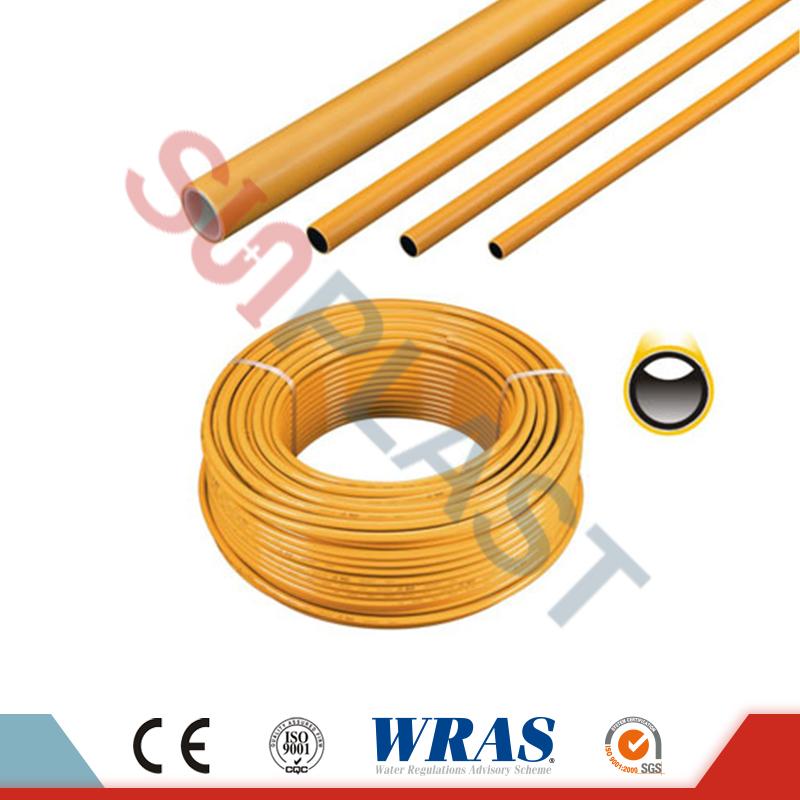
Table of Contents
- 1. What Is the Function of the Inner and Outer PEX Layers?
- 2. How Does the Aluminum Core Enhance the Pipe's Performance?
- 3. What Is the Role of the Two Adhesive Layers in the Five-Layer Structure?
- 4. What Are the Key Technical Specifications of Our Multilayer Pipe?
- Frequently Asked Questions (FAQ)
- Conclusion and Product Consultation
What Is the Function of the Inner and Outer PEX Layers?
The inner and outer layers of a five-layer Multilayer Pipe are made from cross-linked polyethylene (PEX), a high-performance polymer that is chemically cross-linked to improve its thermal and mechanical properties. The inner layer is in direct contact with the fluid being transported, so it must be inert, smooth, and resistant to chemical attack. The outer layer acts as a protective shield against mechanical damage, UV radiation, and environmental chemicals. Both layers contribute to the pipe's flexibility, allowing it to be bent and routed around obstacles without cracking. At Ningbo Sunplast Pipe Co., Ltd., we use a premium grade of PEX-B (silane cross-linked) for our Multilayer Pipe, which offers superior resistance to chlorine, chloramines, and high-temperature water, ensuring a long service life in demanding applications.
Key functions and properties of the PEX layers in our Multilayer Pipe:
- Chemical resistance: PEX is resistant to a wide range of chemicals, including acids, alkalis, and salts commonly found in potable water and industrial fluids. It does not rust, scale, or corrode, ensuring consistent water quality and flow.
- Low friction inner surface: The inner PEX layer has a smooth surface with a roughness of less than 0.4 micrometres, which minimizes pressure drop and prevents the accumulation of deposits or biofilm. This improves hydraulic efficiency and reduces pumping costs.
- Thermal stability: Our PEX layers can withstand continuous operating temperatures of up to 95°C and short-term peaks of 110°C, making them suitable for both hot water supply and heating systems.
- Flexibility and handling: The PEX layers provide the pipe with the flexibility to be bent to a minimum radius of 5 times the pipe diameter (using a bending spring), which reduces the number of fittings required and simplifies installation in tight spaces.
- UV protection: The outer PEX layer is formulated with carbon black and UV stabilizers to resist degradation from sunlight exposure, allowing the pipe to be stored outdoors for extended periods without deterioration.
The performance of the PEX layers is validated through a series of rigorous tests at our factory. We conduct long-term hydrostatic pressure testing (according to ISO 1167) to verify that the PEX layers maintain their integrity under sustained pressure and temperature. We also perform accelerated aging tests in chlorinated water (4 ppm chlorine, 90°C) to simulate 50 years of service life. Our results consistently show that our PEX layers retain over 85 percent of their original tensile strength after 10,000 hours of exposure, confirming their exceptional durability. This reliability is why our Multilayer Pipe is trusted in critical applications such as hospital water supply, district heating, and offshore oil platforms.
In addition, the inner PEX layer is manufactured from food-grade materials that comply with NSF 61, WRAS, and DVGW W270 standards for drinking water contact. This ensures that the pipe does not leach harmful substances into the water, making it safe for residential and commercial potable water systems. Our factory at Sunplast performs a comprehensive extraction test on every batch of PEX resin to verify its compliance with the most stringent global standards. With the inner and outer PEX layers providing chemical resistance, flexibility, and protection, the five-layer structure establishes a robust foundation for the pipe's overall performance.
How Does the Aluminum Core Enhance the Pipe's Performance?
At the heart of the five-layer Multilayer Pipe lies the aluminum core, a continuous, welded aluminum tube that provides the pipe with its distinctive rigidity, oxygen barrier, and thermal stability. The aluminum core is typically made from alloy 1100 or 3003, which offers a good balance of strength, corrosion resistance, and formability. It is manufactured by roll-forming a strip of aluminum into a tube and then welding the longitudinal seam using a high-frequency induction welding process. This results in a seamless, gas-tight barrier that is essential for the pipe's performance in heating and water systems. The aluminum core is also responsible for the pipe's ability to hold its shape when bent, as it retains a permanent deformation (springback) that allows the pipe to be routed without constant clamping.
Key functions and properties of the aluminum core in our Multilayer Pipe:
- Absolute oxygen barrier: The aluminum layer is impermeable to oxygen, with an oxygen diffusion rate of less than 0.02 mg/(m²·day), which is far below the DIN 4726 standard requirement. This prevents oxygen from entering the water in closed-loop systems, eliminating the primary cause of corrosion in steel radiators, pumps, and boilers.
- Dimensional stability: The aluminum core restricts the thermal expansion of the PEX layers, giving the Multilayer Pipe a coefficient of thermal expansion of approximately 0.025 mm/m°C, compared to 0.15 mm/m°C for standard PEX. This eliminates the need for expansion loops in most installations and prevents the pipe from sagging or buckling under temperature changes.
- Structural strength: The aluminum core increases the pipe's burst pressure and resistance to crushing or impact. Our Multilayer Pipe has a burst pressure of up to 80 bar (for 16x2mm pipe), which is significantly higher than PEX-only pipes and comparable to copper.
- Shape retention: When the Multilayer Pipe is bent, the aluminum core undergoes plastic deformation, allowing the pipe to hold the shape without springing back. This simplifies installation, as the pipe can be formed to follow the required path and then fixed with minimal clamping.
- Heat dissipation in underfloor heating: The aluminum core acts as a heat spreader, distributing the heat from the warm water more evenly across the floor surface, reducing temperature gradients and improving system efficiency.
The aluminum core is manufactured using a proprietary welding process that ensures a continuous, defect-free seam. Our factory performs a 100 percent non-destructive testing of the welded seam using eddy current testing, verifying that the seam has no cracks or voids that could compromise the oxygen barrier. We also conduct a burst test on random samples to confirm that the aluminum core can withstand at least 2.5 times the rated working pressure. This rigorous quality control ensures that the aluminum core in every Multilayer Pipe performs reliably over the product's expected 50-year service life.
A practical example from a district heating system in Scandinavia illustrates the critical role of the aluminum core. The system uses our Multilayer Pipe to transport hot water at 90°C across a 2 km network. The oxygen barrier provided by the aluminum core has prevented any corrosion of the steel pipe components, and the low thermal expansion has allowed the pipe to be laid directly in concrete without expansion joints. The system has been in operation for 12 years with zero pipe-related failures, demonstrating the long-term value of the aluminum core. At Ningbo Sunplast Pipe Co., Ltd., we continuously monitor the performance of our aluminum cores through long-term aging tests, ensuring that they maintain their barrier properties and mechanical strength over decades of service.
What Is the Role of the Two Adhesive Layers in the Five-Layer Structure?
The two adhesive layers in a five-layer Multilayer Pipe are often overlooked, but they are absolutely critical to the pipe's integrity and performance. Positioned between the inner PEX layer and the aluminum core, and between the aluminum core and the outer PEX layer, these adhesive layers create a permanent, chemical bond that ensures the pipe acts as a single, unified composite. Without these adhesive layers, the PEX and aluminum would separate under stress, temperature cycling, or pressure, leading to delamination, which would compromise the oxygen barrier and structural strength. The adhesive layers are typically made from a specially formulated maleic anhydride grafted polyethylene, which is capable of bonding to both the non-polar PEX and the polar aluminum oxide surface. Our factory at Ningbo Sunplast Pipe Co., Ltd. has developed a proprietary adhesive formulation that provides exceptional bond strength and resistance to hydrolysis and thermal degradation.
Key functions and properties of the adhesive layers in our Multilayer Pipe:
- Chemical bonding: The adhesive layers create a covalent bond between the PEX layers and the aluminum core, preventing separation even when the pipe is subjected to vibration, bending, or thermal cycling. The bond strength is tested using a peel test, where a 10mm-wide strip is peeled at a 90-degree angle; our adhesive layers consistently achieve a peel strength of over 3 N/mm, which exceeds the industry standard of 2.5 N/mm.
- Stress distribution: The adhesive layers act as a stress-relief interface, distributing the stress that would otherwise be concentrated at the PEX-aluminum interface. This reduces the risk of micro-cracking in the aluminum core or the PEX layers, enhancing the overall fatigue resistance of the pipe.
- Hydrolysis resistance: Our adhesive formulation is designed to resist hydrolysis, even in hot water conditions up to 95°C. Accelerated aging tests show that the bond strength remains above 90 percent of its initial value after 5,000 hours of immersion in water at 95°C, demonstrating its long-term reliability.
- Thermal stability: The adhesive layers maintain their bonding properties across a wide temperature range, from -40°C to 110°C, ensuring that the pipe remains a single structural unit in all operating conditions.
- Processing compatibility: The adhesive is applied as a molten film during the co-extrusion process, ensuring that it forms a uniform, void-free layer between the PEX and aluminum. Our factory uses a multi-layer co-extrusion line that applies the adhesive layers at precise thicknesses, typically between 0.1 and 0.15 mm, to ensure optimal adhesion without adding unnecessary weight or material cost.
The performance of the adhesive layers is verified through a comprehensive test program at our factory. We perform a 90-degree peel test on 10mm-wide strips, measuring the force required to separate the PEX from the aluminum. Our acceptance criterion is a minimum peel strength of 2.8 N/mm, and we test samples from every production shift to ensure consistency. We also subject the pipe to a thermal cycling test, cycling the temperature from -20°C to 95°C for 500 cycles, and then repeating the peel test. Our results demonstrate that the adhesive layers maintain their bond strength even after extreme thermal cycling, confirming that our Multilayer Pipe will remain fully bonded over its service life.
Field experience further validates the importance of the adhesive layers. In an application involving a heated floor system in a commercial building, the adhesive layers in our Multilayer Pipe ensured that the pipe maintained its oxygen barrier integrity even after 10 years of thermal cycling. The building owner reported no corrosion issues in the system's pumps and valves, which were protected by the oxygen barrier. This case highlights that the adhesive layers are not just passive components; they are active contributors to the pipe's overall durability and reliability. At Ningbo Sunplast Pipe Co., Ltd., we continue to innovate in adhesive technology, developing new formulations that improve bonding speed and reduce curing time, further enhancing the quality and consistency of our Multilayer Pipe.
What Are the Key Technical Specifications of Our Multilayer Pipe?
Ningbo Sunplast Pipe Co., Ltd. manufactures a comprehensive range of five-layer Multilayer Pipe for various plumbing, heating, and cooling applications. Our product line includes sizes from 16mm to 75mm outer diameter, with pressure ratings from PN10 to PN25. All our Multilayer Pipe products are manufactured in accordance with ISO 9001, ISO 14001, and meet the requirements of DIN 16836, ASTM F1282, and GB/T 19473. The table below summarizes the key technical specifications for our most popular Multilayer Pipe sizes, which are used in residential, commercial, and industrial projects worldwide. Our factory can also produce customized pipe dimensions and coil lengths to meet specific project requirements.
| Pipe Size (mm) | Total Wall Thickness (mm) | Aluminum Thickness (mm) | Inner PEX Layer (mm) | Outer PEX Layer (mm) | Adhesive Layer (each) (mm) | Working Pressure (bar at 20°C) | Working Pressure (bar at 95°C) | Burst Pressure (bar) |
| 16 x 2.0 | 2.0 | 0.3 | 0.7 | 0.7 | 0.15 | 12.5 | 8.0 | 82 |
| 20 x 2.0 | 2.0 | 0.4 | 0.7 | 0.6 | 0.15 | 12.5 | 8.0 | 75 |
| 25 x 2.5 | 2.5 | 0.5 | 0.9 | 0.8 | 0.15 | 12.5 | 8.0 | 68 |
| 32 x 3.0 | 3.0 | 0.6 | 1.1 | 1.0 | 0.15 | 12.5 | 8.0 | 60 |
| 40 x 3.5 | 3.5 | 0.7 | 1.3 | 1.2 | 0.15 | 12.5 | 8.0 | 52 |
| 50 x 4.0 | 4.0 | 0.8 | 1.5 | 1.4 | 0.15 | 12.5 | 8.0 | 45 |
| 63 x 4.5 | 4.5 | 0.9 | 1.7 | 1.6 | 0.15 | 12.5 | 8.0 | 38 |
| 75 x 5.0 | 5.0 | 1.0 | 1.9 | 1.8 | 0.15 | 12.5 | 8.0 | 32 |
In addition to the standard sizes, our factory offers a high-pressure series (PN25) with thicker walls for industrial and high-rise building applications. We also provide a dedicated Multilayer Pipe for underfloor heating, which has a reduced aluminum thickness for enhanced flexibility. All our Multilayer Pipe products are tested for peel strength (adhesion between layers) and hydraulic burst pressure at our in-house laboratory. We provide a 50-year warranty on our Multilayer Pipe when installed according to our guidelines and used within the specified temperature and pressure limits.
Our quality control process includes 100 percent inspection of the aluminum welded seam using ultrasonic flaw detection, and a high-voltage spark test on the pipe to detect pinholes in the coating. Each coil of Multilayer Pipe is marked with a unique batch number, enabling full traceability from raw materials to finished product. Our factory at Ningbo Sunplast Pipe Co., Ltd. also offers custom color options (white, grey, or red/blue stripes) for easy identification of hot and cold water lines. With our extensive stock and flexible manufacturing capability, we can deliver Multilayer Pipe to any location within 2-4 weeks. We also provide comprehensive technical support, including hydraulic calculations, expansion analysis, and installation training.
Frequently Asked Questions (FAQ)
Question 1: Why is a five-layer structure better than a three-layer structure for multilayer pipes?
Answer: A five-layer structure provides superior bonding and durability compared to a three-layer structure. In a three-layer pipe, the PEX layer is directly bonded to the aluminum core without dedicated adhesive layers, which can lead to delamination over time, especially under thermal cycling and pressure fluctuations. The two adhesive layers in our five-layer Multilayer Pipe create a chemical bond that is stronger and more resistant to hydrolysis, ensuring that the pipe maintains its structural integrity and oxygen barrier for its entire service life. This is why five-layer pipes are the preferred choice for demanding heating and plumbing applications.
Question 2: Can the aluminum core in a five-layer pipe corrode over time?
Answer: The aluminum core in our Multilayer Pipe is fully encapsulated by the inner and outer PEX layers, which are bonded with adhesive layers. This means the aluminum never comes into contact with water or air, so it cannot corrode. Even in the event of the pipe being cut, the exposed aluminum edge is quickly sealed by the creeping of the PEX layers, which is a self-healing property of the material. Our factory has tested this self-healing capability and confirmed that the oxygen barrier is restored within 24 hours at room temperature. As a result, the aluminum core remains corrosion-free for the entire life of the pipe.
Question 3: How does the five-layer structure affect the pipe's thermal conductivity and heat loss?
Answer: The five-layer structure, with its aluminum core, reduces thermal conductivity compared to pure copper pipes. The aluminum core has a thermal conductivity of about 200 W/(m·K), which is significantly lower than copper (385 W/(m·K)). However, the PEX layers have a much lower conductivity (0.35 W/(m·K)), so the overall effective thermal conductivity of the Multilayer Pipe is much lower than copper. This results in up to 40 percent lower heat loss in hot water systems, improving energy efficiency. In underfloor heating, the aluminum core spreads heat evenly, reducing temperature gradients and improving system efficiency. Our factory provides detailed thermal performance data to help engineers optimize system design.
Question 4: Are five-layer pipes suitable for use with all types of fittings and connection systems?
Answer: Yes, five-layer Multilayer Pipe is compatible with a wide range of connection systems, including press fittings, compression fittings, and push-fit fittings. However, it is essential to use fittings that are specifically designed for multilayer composite pipes, as they accommodate the pipe's outer diameter and ensure proper sealing. Our factory recommends using press fittings with O-rings for the most reliable, leak-proof connections. We offer a comprehensive range of compatible fittings and provide detailed installation guidelines. For best results, always follow the fitting manufacturer's instructions and use the correct tools for cutting, deburring, and pressing.
Question 5: What certifications does Ningbo Sunplast Pipe Co., Ltd. hold for its five-layer multilayer pipe?
Answer: Our five-layer Multilayer Pipe products are certified under multiple international standards: ISO 9001 (Quality Management), ISO 14001 (Environmental Management), DIN 16836, ASTM F1282, GB/T 19473, and WRAS (Water Regulations Advisory Scheme) for the UK market. We also hold the KIWA certification for gas applications and the DVGW (German gas and water association) approval for drinking water. Additionally, our factory is regularly audited by SGS and TÜV Rheinland to ensure compliance with the latest standards. We provide a complete set of third-party test reports and certificates with every shipment, ensuring full traceability and compliance with local regulations.
Conclusion: The Five-Layer Structure Delivers Unmatched Performance
The five-layer structure of a multilayer composite pipe is a testament to modern materials engineering. Each layer—the inner PEX, adhesive, aluminum core, adhesive, and outer PEX—plays a specific and essential role in delivering the pipe's superior performance. From the chemical resistance and flexibility of the PEX layers, to the oxygen barrier and dimensional stability of the aluminum core, to the bonding strength of the adhesive layers, every component is optimized for reliability and longevity. At Ningbo Sunplast Pipe Co., Ltd., our factory has perfected the manufacturing of five-layer Multilayer Pipe, ensuring that each pipe meets the highest standards of quality and performance. Our extensive product range, rigorous quality control, and commitment to innovation make us a trusted partner for plumbing projects of all sizes.
Are you looking for a reliable, high-performance Multilayer Pipe for your next project? Contact Ningbo Sunplast Pipe Co., Ltd. today for a comprehensive product consultation. Provide your project specifications, and our engineering team will recommend the optimal Multilayer Pipe size, pressure rating, and connection method. We offer free samples, competitive pricing, and fast delivery to any location. Request your free Multilayer Pipe sample and technical data pack now from Ningbo Sunplast Pipe Co., Ltd. and experience the superior performance of our five-layer Multilayer Pipe.