- English
- Español
- Português
- русский
- Français
- 日本語
- Deutsch
- tiếng Việt
- Italiano
- Nederlands
- ภาษาไทย
- Polski
- 한국어
- Svenska
- magyar
- Malay
- বাংলা ভাষার
- Dansk
- Suomi
- हिन्दी
- Pilipino
- Türkçe
- Gaeilge
- العربية
- Indonesia
- Norsk
- تمل
- český
- ελληνικά
- український
- Javanese
- فارسی
- தமிழ்
- తెలుగు
- नेपाली
- Burmese
- български
- ລາວ
- Latine
- Қазақша
- Euskal
- Azərbaycan
- Slovenský jazyk
- Македонски
- Lietuvos
- Eesti Keel
- Română
- Slovenski
- मराठी
- Srpski језик

What Makes Multilayer Pipes a Preferred Choice for Modern Plumbing Applications?
In the evolving world of plumbing systems, multilayer pipes have emerged as a top choice for both residential and commercial projects. But what exactly makes them so appealing? The answer lies in their unique composite structure, which combines the best properties of plastic and metal. A typical Multilayer Pipe consists of a cross-linked polyethylene (PEX) inner and outer layer, bonded to a central aluminum core. This design delivers an exceptional balance of flexibility, durability, thermal resistance, and corrosion protection that traditional materials like copper, galvanized steel, and even standard plastic pipes struggle to match. At Ningbo Sunplast Pipe Co., Ltd., our factory has been manufacturing high-quality Multilayer Pipe for over 18 years, and we have witnessed its adoption grow as plumbers, engineers, and facility managers recognize its superior performance in a wide range of applications—from hot and cold water supply to underfloor heating and chilled water networks.
The preference for Multilayer Pipe is driven by several key factors: it offers lower thermal conductivity than metal pipes, reducing heat loss in hot water systems; its aluminum core provides an absolute oxygen barrier, protecting heating systems from corrosion; it is lightweight and easy to handle, cutting installation time and labor costs; and it resists scale build-up and chemical attack, ensuring consistent water quality and flow over decades. Moreover, the pipe's ability to be bent and shaped without the need for numerous fittings reduces potential leak points and simplifies routing in tight spaces. These advantages are not just theoretical; they are backed by rigorous testing and real-world performance over many years. In this article, we will dissect the engineering, material science, and practical benefits that make Multilayer Pipe a preferred choice in modern plumbing, provide detailed technical specifications, and share installation best practices from our factory's extensive experience. Whether you are a plumbing contractor, a building services engineer, or a facility owner, this guide will help you understand why Multilayer Pipe is setting the standard for the future of plumbing.
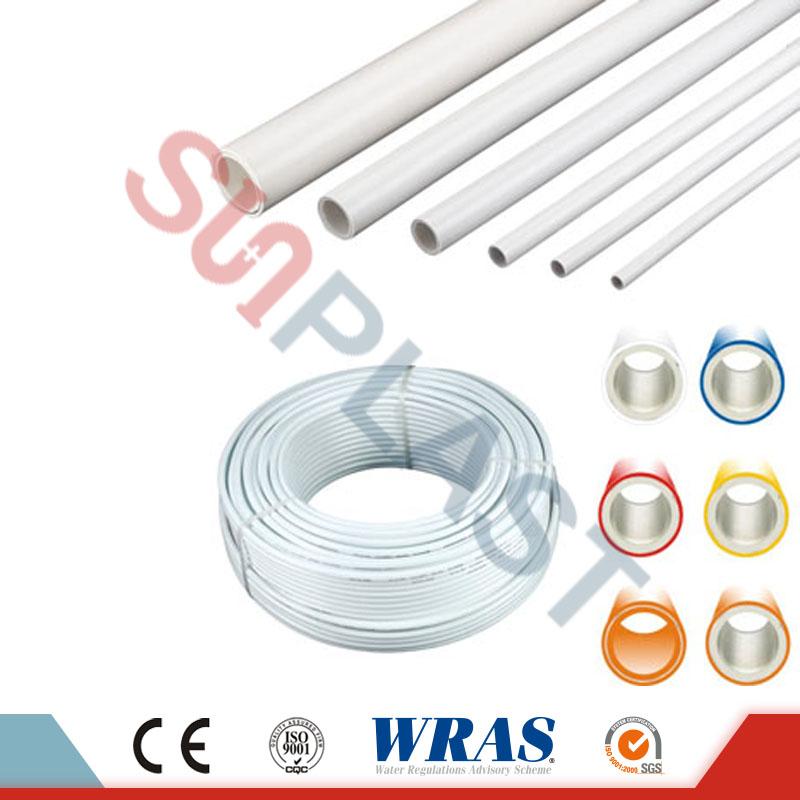
Table of Contents
- 1. Why Does the Multilayer Design Offer Superior Corrosion and Scale Resistance?
- 2. How Does the Aluminum Core in Multilayer Pipe Enhance Thermal Performance and Oxygen Barrier?
- 3. What Are the Key Technical Specifications of Our Multilayer Pipe?
- 4. How Does Ease of Installation and Long-Term Reliability Make Multilayer Pipe a Cost-Effective Choice?
- Frequently Asked Questions (FAQ)
- Conclusion and Product Selection Assistance
Why Does the Multilayer Design Offer Superior Corrosion and Scale Resistance?
One of the most significant drawbacks of traditional metal pipes, such as copper and galvanized steel, is their susceptibility to corrosion and scale build-up. Over time, copper pipes can develop pinhole leaks due to aggressive water chemistry, while galvanized pipes can rust internally, reducing water flow and causing discoloration. Multilayer Pipe, with its inner and outer layers of cross-linked polyethylene (PEX), presents a completely inert surface to the water. PEX is chemically resistant to most minerals, acids, and salts found in municipal water supplies, meaning that scale does not adhere to the pipe wall, and corrosion is simply not possible. This resistance ensures that the pipe's internal diameter remains constant throughout its service life, maintaining full flow capacity and preventing the pressure drops that often plague older metal systems. Our factory at Ningbo Sunplast Pipe Co., Ltd. has engineered the inner PEX layer to a smooth surface finish of less than 0.4 micrometres, further reducing the risk of sediment accumulation.
Key corrosion and scale resistance benefits of Multilayer Pipe:
- Chemical inertness: PEX is resistant to a wide range of chemicals, including chlorine, chloramines, and acidic or alkaline water. This is particularly important in areas where water treatment chemicals are aggressive, as it prevents degradation of the pipe material over time.
- No electrolytic corrosion: Unlike metal pipes, which can suffer from galvanic corrosion when connected to dissimilar metals, Multilayer Pipe is entirely non-metallic on its inner and outer surfaces. The aluminum core is completely encapsulated and isolated from the water and the external environment, preventing any electrolytic reaction.
- Scale and biofilm resistance: The smooth inner surface of the Multilayer Pipe prevents the adhesion of calcium carbonate scale and biofilm formation, which can clog pipes and harbour bacteria. This is especially beneficial in hot water systems, where scale precipitation is accelerated.
- Long-term material stability: The PEX layers are stabilised with antioxidants that prevent degradation from chlorine and thermal oxidation. Our Multilayer Pipe is tested to withstand over 10,000 hours of continuous exposure to chlorinated water at 90°C, demonstrating its exceptional longevity.
To illustrate the practical benefit, consider a large apartment complex in an area with hard water. The original copper piping system began to show significant scale deposits within five years, causing reduced flow and frequent maintenance calls to clean or replace sections. After a full retrofit with our Multilayer Pipe, the system has been operating for over 12 years with no scale-related issues. The building owner reported a 30 percent reduction in maintenance costs and improved resident satisfaction due to consistent water pressure. This case demonstrates that the corrosion and scale resistance of Multilayer Pipe is not just a theoretical advantage, but a tangible benefit that reduces operational costs and extends system life.
Additionally, the oxygen barrier provided by the aluminum core (which we will discuss in detail later) prevents the formation of rust in ferrous components of heating systems, protecting pumps, valves, and radiators from corrosion. This means that the entire plumbing or heating system benefits from the pipe's protective design, not just the pipe itself. For building owners, this translates to a lower total cost of ownership and a more reliable system over its lifecycle. Our factory provides detailed corrosion resistance data for our Multilayer Pipe products, allowing engineers to specify with confidence in the most demanding environments.
How Does the Aluminum Core in Multilayer Pipe Enhance Thermal Performance and Oxygen Barrier?
The aluminum core is the defining feature of Multilayer Pipe, and it contributes significantly to its thermal performance and oxygen barrier properties. Unlike pure plastic pipes, which have relatively high thermal conductivity and are permeable to oxygen, the aluminum core acts as a thermal break and an absolute barrier. This has major implications for both hot water supply and heating systems. In hot water lines, the lower thermal conductivity of the composite structure (compared to copper) reduces heat loss as water travels from the heater to the tap, saving energy and ensuring that hot water reaches the outlet at a higher temperature. In underfloor heating systems, the oxygen barrier prevents corrosion of the metal components, while the aluminum layer helps to spread the heat more evenly across the floor, improving comfort and efficiency.
Key thermal and oxygen barrier benefits of the aluminum core in Multilayer Pipe:
- Low thermal conductivity: The aluminum layer, with a thermal conductivity of approximately 200 W/(m·K), is surrounded by PEX with a conductivity of about 0.35 W/(m·K). The overall effective thermal conductivity of Multilayer Pipe is significantly lower than that of copper (385 W/(m·K)), reducing heat loss by up to 50 percent in hot water applications. This translates into lower energy bills and faster hot water delivery.
- Absolute oxygen barrier: The aluminum layer is completely impermeable to oxygen, with an oxygen diffusion rate of less than 0.02 mg/(m²·day), far below the DIN 4726 standard requirement of 0.1 mg/(m²·day). This prevents oxygen from entering the water in closed-loop heating systems, eliminating the primary cause of corrosion in steel radiators, pumps, and boilers.
- Dimensional stability under temperature changes: The aluminum core restricts the thermal expansion of the PEX layers, giving Multilayer Pipe a coefficient of thermal expansion of approximately 0.025 mm/m°C, compared to 0.15 mm/m°C for standard PEX. This means the pipe does not sag, buckle, or stress fittings during temperature changes, reducing the need for expansion loops and supports.
- Improved heat distribution in underfloor heating: The aluminum layer acts as a heat spreading sheet, distributing the heat from the warm water more evenly across the floor surface. This reduces temperature gradients and improves the overall efficiency of the heating system.
A practical example from a retirement home in Germany illustrates these benefits. The facility's heating system was upgraded from steel pipes to our Multilayer Pipe with an aluminum core. The system had previously suffered from frequent pump failures due to oxygen corrosion. After the upgrade, the oxygen barrier eliminated the corrosion, and the reduced thermal expansion allowed the pipe to be installed directly into the concrete slab without the need for expansion loops. The facility manager reported a 15 percent reduction in energy consumption for space heating and a complete elimination of pump replacement costs over five years. This case highlights how the aluminum core contributes to both energy efficiency and system reliability.
Our factory at Sunplast uses a high-purity aluminum alloy (AA 1100) for the core, which is ultrasonically welded to ensure a continuous, seamless barrier. The aluminum layer is also annealed to provide the flexibility required for bending without cracking. We subject the aluminum core to a burst test at 2.5 times the rated working pressure to verify its integrity before the pipe is coated with the outer PEX layer. This attention to quality ensures that our Multilayer Pipe delivers the thermal and barrier performance that modern plumbing applications demand.
What Are the Key Technical Specifications of Our Multilayer Pipe?
Ningbo Sunplast Pipe Co., Ltd. manufactures a comprehensive range of Multilayer Pipe for various plumbing, heating, and cooling applications. Our product line includes sizes from 16mm to 75mm outer diameter, with pressure ratings from PN10 to PN25. All our Multilayer Pipe products are manufactured in accordance with ISO 9001, ISO 14001, and meet the requirements of DIN 16836, ASTM F1282, and GB/T 19473. The table below summarizes the key technical specifications for our most popular Multilayer Pipe sizes, which are used in residential, commercial, and industrial projects worldwide. Our factory can also produce customized pipe dimensions and coil lengths to meet specific project requirements.
| Pipe Size (mm) | Wall Thickness (mm) | Aluminum Thickness (mm) | Working Pressure (bar at 20°C) | Working Pressure (bar at 95°C) | Burst Pressure (bar) | Weight (kg/m) | Coil Length (m) |
| 16 x 2.0 | 2.0 | 0.3 | 12.5 | 8.0 | 82 | 0.12 | 200 |
| 20 x 2.0 | 2.0 | 0.4 | 12.5 | 8.0 | 75 | 0.16 | 160 |
| 25 x 2.5 | 2.5 | 0.5 | 12.5 | 8.0 | 68 | 0.27 | 100 |
| 32 x 3.0 | 3.0 | 0.6 | 12.5 | 8.0 | 60 | 0.42 | 50 |
| 40 x 3.5 | 3.5 | 0.7 | 12.5 | 8.0 | 52 | 0.65 | 25 |
| 50 x 4.0 | 4.0 | 0.8 | 12.5 | 8.0 | 45 | 0.95 | 20 |
| 63 x 4.5 | 4.5 | 0.9 | 12.5 | 8.0 | 38 | 1.35 | 10 |
| 75 x 5.0 | 5.0 | 1.0 | 12.5 | 8.0 | 32 | 1.80 | 10 |
In addition to the standard sizes, our factory offers a high-pressure series (PN25) with thicker walls for industrial and high-rise building applications. We also provide a dedicated Multilayer Pipe for underfloor heating, which has a reduced aluminum thickness for enhanced flexibility. All our Multilayer Pipe products are tested for peel strength (adhesion between layers) and hydraulic burst pressure at our in-house laboratory. We provide a 50-year warranty on our Multilayer Pipe when installed according to our guidelines and used within the specified temperature and pressure limits.
Our quality control process includes 100 percent inspection of the aluminum welded seam using ultrasonic flaw detection, and a high-voltage spark test on the pipe to detect pinholes in the coating. Each coil of Multilayer Pipe is marked with a unique batch number, enabling full traceability from raw materials to finished product. Our factory at Ningbo Sunplast Pipe Co., Ltd. also offers custom color options (white, grey, or red/blue stripes) for easy identification of hot and cold water lines. With our extensive stock and flexible manufacturing capability, we can deliver Multilayer Pipe to any location within 2-4 weeks. We also provide comprehensive technical support, including hydraulic calculations, expansion analysis, and installation training.
How Does Ease of Installation and Long-Term Reliability Make Multilayer Pipe a Cost-Effective Choice?
The true value of Multilayer Pipe becomes apparent not just in its material properties, but in the total cost of ownership over the entire lifecycle of a plumbing system. While the initial material cost of Multilayer Pipe may be comparable to or slightly higher than standard PEX, it is significantly lower than copper, and the total installed cost is often less than both due to its ease of handling, fewer fittings, and faster installation times. Moreover, the long-term reliability—resistance to corrosion, scale, and thermal stress—means that maintenance and replacement costs are dramatically reduced. At Ningbo Sunplast Pipe Co., Ltd., our factory has analyzed numerous projects and consistently found that Multilayer Pipe offers the lowest lifecycle cost of any plumbing material, particularly in large-scale or complex installations.
Key factors that make Multilayer Pipe a cost-effective choice:
- Faster installation: Multilayer Pipe is lightweight (typically 60-70 percent lighter than copper) and can be cut, bent, and connected using simple press-fit or compression fittings. The ability to bend the pipe by hand (with a bending spring) eliminates many fittings, reducing the number of potential leak points and the time required to route the pipe through walls and ceilings.
- Reduced labor costs: Because fewer fittings and supports are required, and because the pipe is easier to handle, installation labor costs can be up to 40 percent lower than for copper systems. This is particularly significant for large-scale projects where labor is the major cost driver.
- Minimal maintenance: The corrosion and scale resistance of Multilayer Pipe means that it does not require descaling, chemical cleaning, or replacement due to internal degradation. In heating systems, the oxygen barrier protects other components, reducing the overall maintenance burden.
- Long service life: Our Multilayer Pipe is designed for a service life of 50 years or more, as verified by accelerated aging tests. This means that the system will not need to be replaced during the typical building lifecycle, avoiding the high costs of disruptive retrofit projects.
- Energy savings: The lower thermal conductivity of Multilayer Pipe reduces heat loss in hot water systems, lowering energy bills. In underfloor heating, the aluminum core improves heat distribution, allowing the system to operate at lower water temperatures, which can save an additional 10-20 percent on heating costs.
A case study from a large hotel chain illustrates the cost-effectiveness of Multilayer Pipe. The chain was renovating a 500-room property in Southeast Asia. They compared the total installed cost of a copper system versus a Multilayer Pipe system for the entire hot and cold water supply. The Multilayer Pipe system cost 35 percent less to install, and the hotel estimated annual energy savings of USD 8,000 due to reduced heat loss. Over a 10-year period, the savings exceeded USD 100,000, far outweighing the slight premium of the pipe material. Additionally, the hotel reported zero maintenance issues with the Multilayer Pipe system after 8 years of operation, compared to numerous complaints of leaks and blockages in the copper systems of their other properties.
Our factory provides a total cost of ownership calculator that allows contractors and facility managers to input their project parameters and compare the lifecycle costs of different piping materials. This tool takes into account material cost, installation labor, energy consumption, maintenance frequency, and expected lifespan. The results consistently show that Multilayer Pipe offers the lowest total cost over the system's life. For projects where budget is a concern, we also offer volume discounts and flexible payment terms to make the transition to Multilayer Pipe even more accessible. By choosing Multilayer Pipe, you are not just selecting a superior material; you are making a sound financial investment in the long-term performance and reliability of your plumbing system.
Frequently Asked Questions (FAQ)
Question 1: Can Multilayer Pipe be used for both potable (drinking) water and heating systems?
Answer: Yes, Multilayer Pipe is certified for use in potable water systems (meeting drinking water standards such as WRAS, NSF 61, and DVGW W270) and is also ideal for heating systems, including underfloor heating, radiator circuits, and fan coil units. The PEX layers are manufactured from food-grade materials that do not leach contaminants, and the aluminum core is fully encapsulated, ensuring no contact with water. For heating applications, the oxygen barrier provided by the aluminum core is essential for protecting metal components from corrosion. Our factory at Ningbo Sunplast Pipe Co., Ltd. offers a versatile product range that covers both applications, simplifying inventory and procurement.
Question 2: What is the maximum temperature and pressure that Multilayer Pipe can withstand?
Answer: Our Multilayer Pipe is rated for continuous operation at temperatures up to 95°C and pressures up to 8 bar (at 95°C) for standard PN12.5 pipes. For higher pressure applications, we offer PN20 and PN25 pipes with thicker walls. The burst pressure is significantly higher than the working pressure, providing a substantial safety margin. For short-term excursions, the pipe can withstand temperatures up to 110°C (e.g., during system sterilization). We always recommend consulting the specific technical data sheet for the exact pressure-temperature limits of the chosen pipe size and pressure rating.
Question 3: How does the cost of Multilayer Pipe compare to copper or standard PEX?
Answer: On a per-meter basis, Multilayer Pipe is generally more expensive than standard PEX but less expensive than copper. However, the total installed cost of Multilayer Pipe is often 20-40 percent lower than copper due to its lighter weight, ease of bending, and fewer fittings required. Compared to standard PEX, Multilayer Pipe offers additional benefits (thermal stability, oxygen barrier, and rigidity) that justify the slightly higher material cost, especially in heating systems and exposed installations. Our factory provides project-specific cost comparisons to help you evaluate the best option for your application.
Question 4: Is special training required to install Multilayer Pipe correctly?
Answer: While Multilayer Pipe is easier to install than copper, it does require familiarity with the specific connection systems (press-fit, compression, or push-fit). Plumbers with experience in PEX or copper piping can typically be trained in a half-day session. Our factory offers training workshops and a comprehensive installation manual that covers cutting, deburring, bending, and connection methods. We also provide online video resources and on-site support for large projects. Proper installation is crucial to ensure the long-term performance of the system, and we encourage all installers to review our guidelines before starting.
Question 5: What is the expected lifespan of Multilayer Pipe, and is it covered by a warranty?
Answer: Based on accelerated testing and field data, the expected service life of our Multilayer Pipe is 50 years or more under normal operating conditions. We provide a 50-year warranty on the pipe itself, covering manufacturing defects. The warranty is conditional on the pipe being used within its specified temperature and pressure limits, and installed in accordance with our instructions. For added peace of mind, we also offer an extended warranty on the fitting system when using our recommended press fittings. This comprehensive coverage reflects our confidence in the long-term reliability of our Multilayer Pipe products.
Conclusion: The Future of Plumbing is Multilayer Pipe
The growing preference for Multilayer Pipe in modern plumbing applications is a testament to its unparalleled combination of performance, durability, and cost-efficiency. From its corrosion resistance and oxygen barrier to its thermal performance and ease of installation, Multilayer Pipe addresses the key challenges that have long plagued traditional metal and plastic systems. At Ningbo Sunplast Pipe Co., Ltd., our factory has been at the forefront of this technology, continuously refining our Multilayer Pipe products to meet the evolving needs of the industry. Our extensive product range, rigorous quality control, and commitment to customer support make us a trusted partner for plumbing projects of all sizes.
Are you planning a new plumbing or heating project, or considering an upgrade to your existing system? Contact Ningbo Sunplast Pipe Co., Ltd. today for a comprehensive product consultation. Provide your project specifications, and our engineering team will recommend the optimal Multilayer Pipe size, pressure rating, and connection method. We offer free samples, competitive pricing, and fast delivery to any location. Request your free Multilayer Pipe sample and technical data pack now from Ningbo Sunplast Pipe Co., Ltd. and experience the future of plumbing reliability.