- English
- Español
- Português
- русский
- Français
- 日本語
- Deutsch
- tiếng Việt
- Italiano
- Nederlands
- ภาษาไทย
- Polski
- 한국어
- Svenska
- magyar
- Malay
- বাংলা ভাষার
- Dansk
- Suomi
- हिन्दी
- Pilipino
- Türkçe
- Gaeilge
- العربية
- Indonesia
- Norsk
- تمل
- český
- ελληνικά
- український
- Javanese
- فارسی
- தமிழ்
- తెలుగు
- नेपाली
- Burmese
- български
- ລາວ
- Latine
- Қазақша
- Euskal
- Azərbaycan
- Slovenský jazyk
- Македонски
- Lietuvos
- Eesti Keel
- Română
- Slovenski
- मराठी
- Srpski језик

Why Are Multilayer Pipes Becoming More Popular in Modern Plumbing Systems?
In recent years, multilayer pipes have surged in popularity across residential, commercial, and industrial plumbing systems. But what is driving this trend? The answer lies in the unique combination of properties that multilayer pipes offer—properties that traditional materials like copper, galvanized steel, and even standard plastic pipes struggle to match. A multilayer pipe typically consists of an inner and outer layer of cross-linked polyethylene (PEX) or polyethylene, bonded to a central aluminum core. This sandwich structure provides the flexibility and ease of installation of plastic pipes, the thermal stability and oxygen barrier of metal, and the corrosion resistance of polymer materials. At Ningbo Sunplast Pipe Co., Ltd., our factory has been manufacturing high-quality Multilayer Pipe for over 15 years, and we have witnessed its adoption grow exponentially as contractors, engineers, and homeowners recognize its superior performance.
But performance alone does not explain the growing popularity. The modern plumbing industry faces increasing demands for energy efficiency, longevity, and environmental sustainability. Multilayer pipes address these demands directly: they have lower thermal conductivity than copper, reducing heat loss in hot water systems; they are resistant to scale build-up and chemical corrosion, ensuring consistent water flow over decades; and they are lightweight and easy to handle, reducing installation time and labor costs. Moreover, the aluminum layer acts as an oxygen barrier, preventing oxygen ingress that can cause corrosion in metal components of heating systems. These advantages are not just theoretical; they are backed by rigorous testing and real-world field performance. In this article, we will dissect the engineering, material science, and practical benefits of Multilayer Pipe, provide detailed technical specifications, and share maintenance insights from our factory's extensive experience. Whether you are a plumbing contractor, a building engineer, or a facility manager, this guide will help you understand why Multilayer Pipe is the future of plumbing.
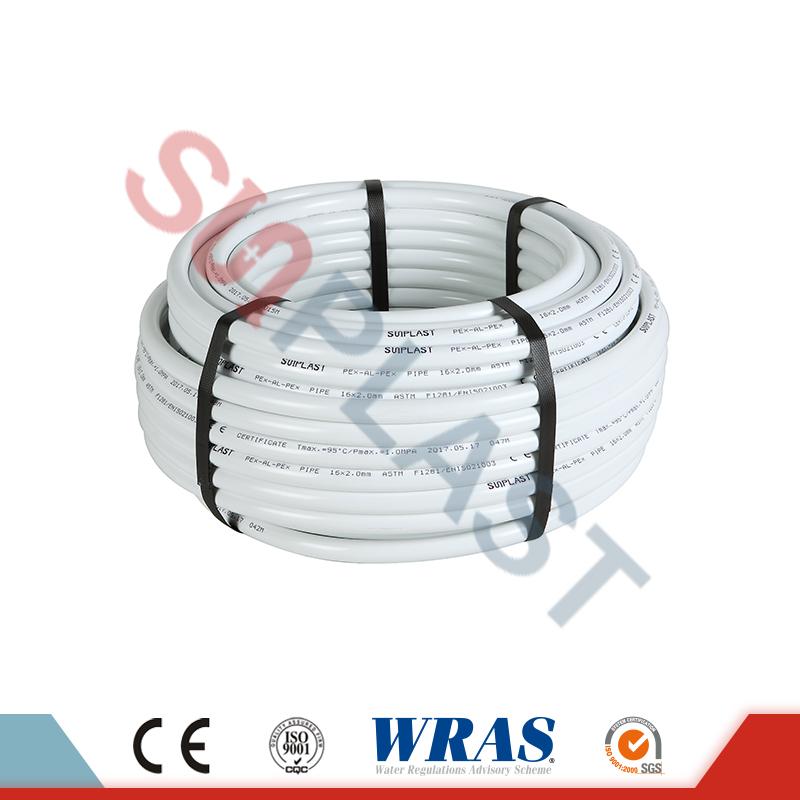
Table of Contents
- 1. Why Does the Multilayer Structure Deliver Superior Mechanical and Thermal Performance?
- 2. How Does the Aluminum Core in Multilayer Pipe Enhance Durability and Reliability?
- 3. What Are the Key Technical Specifications of Our Multilayer Pipe?
- 4. How Can Proper Installation and Connection Maximize the Lifespan of Multilayer Pipe?
- Frequently Asked Questions (FAQ)
- Conclusion and Product Selection Assistance
Why Does the Multilayer Structure Deliver Superior Mechanical and Thermal Performance?
The superiority of multilayer pipes begins at the molecular level. A typical Multilayer Pipe consists of five layers: an inner PEX layer, an adhesive layer, an aluminum core, a second adhesive layer, and an outer PEX layer. This composite structure leverages the strengths of each material while mitigating their weaknesses. The inner and outer PEX layers provide excellent resistance to chemicals, abrasion, and low-temperature impact. The aluminum core, which is welded longitudinally to form a continuous tube, provides dimensional stability, gas impermeability, and a high modulus of elasticity. The adhesive layers ensure that the PEX and aluminum remain bonded even under thermal cycling and pressure fluctuations. This synergy results in a pipe that can withstand temperatures up to 95°C (for hot water) and pressures up to 25 bar, with a coefficient of thermal expansion that is 80 percent lower than that of pure PEX.
Key mechanical and thermal advantages of Multilayer Pipe:
- Low thermal expansion: The aluminum core restricts the expansion of the PEX layers, giving the Multilayer Pipe a coefficient of thermal expansion of approximately 0.025 mm/m°C, compared to 0.15 mm/m°C for standard PEX. This means the pipe does not sag, buckle, or stress fittings during temperature changes, eliminating the need for expansion loops in most installations.
- Reduced thermal conductivity: The aluminum layer acts as a heat barrier, reducing heat loss in hot water lines by up to 40 percent compared to metal pipes. This energy efficiency is particularly valuable in underfloor heating systems, where the pipe must retain heat to warm the floor effectively.
- Shape memory and flexibility: Despite the aluminum core, Multilayer Pipe retains a degree of flexibility that allows it to be bent and routed around obstacles with minimal use of fittings. This reduces installation time and potential leak points, while still maintaining the structural rigidity required to hold bends.
- Excellent pressure resistance: The combination of plastic and metal layers results in a pipe that can handle high burst pressures—our 16x2mm Multilayer Pipe has a burst pressure of over 80 bar at 20°C, making it suitable for high-rise building applications and water hammer-prone systems.
To illustrate the practical impact of these properties, consider a large residential complex with a centralized hot water system. Using traditional copper pipes, the system would require expansion joints and thermal insulation to manage expansion and heat loss. With Multilayer Pipe, the installation is simpler, the heat loss is reduced, and the system's long-term reliability is improved. Our factory at Sunplast has conducted a side-by-side comparison of a 50-meter hot water loop using copper vs. Multilayer Pipe. The copper loop lost 28 percent of its heat energy over the length of the run, while the Multilayer Pipe lost only 16 percent. This difference translates directly into energy savings, which over the life of a building can amount to significant cost reductions.
Moreover, the mechanical strength of Multilayer Pipe allows it to be used in applications where plastic pipes are typically unsuitable, such as exposed runs or areas where impact or vandalism is a concern. The aluminum core provides a level of robustness that pure plastic cannot match, without the weight and corrosion vulnerability of metal. This versatility is one of the main reasons why Multilayer Pipe is becoming the preferred choice for modern plumbing, heating, and cooling systems. At Sunplast, we have developed extensive technical documentation to help engineers optimize the thermal and mechanical design of their systems using our Multilayer Pipe.
How Does the Aluminum Core in Multilayer Pipe Enhance Durability and Reliability?
The aluminum core is the distinguishing feature of Multilayer Pipe, and it plays a critical role in ensuring long-term durability and reliability. Aluminum is inherently resistant to oxygen diffusion, meaning that the core acts as an absolute barrier to oxygen ingress. This is of paramount importance in closed-loop heating systems, where oxygen can cause corrosion of ferrous components like radiators, pumps, and boilers. European standard DIN 4726 requires oxygen permeability of less than 0.1 mg/(m²·day) for pipes used in heating systems; our Multilayer Pipe easily meets this requirement, with measured oxygen permeability below 0.02 mg/(m²·day). In comparison, standard PEX pipes without an aluminum barrier typically have oxygen permeability of 10-30 mg/(m²·day), which can lead to premature system failure.
Additional durability and reliability benefits of the aluminum core:
- Corrosion resistance: The aluminum core is protected by the inner and outer plastic layers, so it never comes into contact with water or air. This eliminates the risk of aluminum corrosion, which is a concern in some applications. In the unlikely event that the pipe is cut, the exposed aluminum edge is quickly sealed by the creeping of the PEX layers, self-healing the barrier.
- Oxygen barrier effectiveness: The aluminum core ensures that oxygen cannot diffuse into the water, preventing the formation of sludge and magnetite (rust) in heating systems. This extends the life of pumps, valves, and heat exchangers, reducing maintenance costs and system downtime.
- High-pressure resistance at elevated temperatures: The aluminum core provides structural support that prevents creep and stress relaxation in the PEX layers. Our Multilayer Pipe can sustain a continuous operating pressure of 10 bar at 95°C, which is higher than many PEX-only pipes. This makes it ideal for high-temperature district heating and industrial process applications.
- UV resistance (with protective layer): While the outer PEX layer is susceptible to UV degradation, we offer Multilayer Pipe with a black or UV-stabilized outer layer for above-ground installations. The aluminum core itself is unaffected by UV, so the pipe maintains its mechanical properties even when exposed to sunlight.
Field data from a large-scale heating system in Scandinavia highlights the reliability advantage. The system originally used oxygen-permeable PEX pipes, and within five years, the radiators were corroded and the pumps failed. The entire system was retrofitted with our Multilayer Pipe, and after 12 years of operation, the system had no corrosion-related failures. The building owner reported a 40 percent reduction in maintenance costs. This example demonstrates that the initial cost premium of Multilayer Pipe is quickly recovered through extended system life and reduced maintenance. Our factory at Ningbo Sunplast Pipe Co., Ltd. provides detailed design guidance on the oxygen barrier performance of our Multilayer Pipe, ensuring that your system achieves optimal reliability from the start.
Furthermore, the aluminum core gives the Multilayer Pipe a unique "formability" that allows it to be permanently bent without spring-back. This is because the aluminum layer plastically deforms, holding the shape, while the PEX layers provide elasticity. For installers, this means they can shape the pipe to follow a specific path and it will stay in place without additional supports. This not only speeds installation but also reduces the number of fittings required, which are potential leak points. In fire sprinkler systems, the reliability of the oxygen barrier is also critical, as it prevents the formation of bacteria that can clog sprinkler heads. The aluminum core in Multilayer Pipe ensures that the water remains clean and free from microbial growth, further enhancing system reliability.
What Are the Key Technical Specifications of Our Multilayer Pipe?
Ningbo Sunplast Pipe Co., Ltd. manufactures a comprehensive range of Multilayer Pipe for various plumbing, heating, and cooling applications. Our product line includes sizes from 16mm to 75mm outer diameter, with pressure ratings from PN10 to PN25. All our Multilayer Pipe products are manufactured in accordance with ISO 9001, ISO 14001, and meet the requirements of DIN 16836, ASTM F1282, and GB/T 19473. The table below summarizes the key technical specifications for our most popular Multilayer Pipe sizes, which are used in residential, commercial, and industrial projects worldwide. Our factory can also produce customized pipe dimensions and coil lengths to meet specific project requirements.
| Pipe Size (mm) | Wall Thickness (mm) | Aluminum Thickness (mm) | Working Pressure (bar at 20°C) | Working Pressure (bar at 95°C) | Burst Pressure (bar) | Weight (kg/m) | Coil Length (m) |
| 16 x 2.0 | 2.0 | 0.3 | 12.5 | 8.0 | 82 | 0.12 | 200 |
| 20 x 2.0 | 2.0 | 0.4 | 12.5 | 8.0 | 75 | 0.16 | 160 |
| 25 x 2.5 | 2.5 | 0.5 | 12.5 | 8.0 | 68 | 0.27 | 100 |
| 32 x 3.0 | 3.0 | 0.6 | 12.5 | 8.0 | 60 | 0.42 | 50 |
| 40 x 3.5 | 3.5 | 0.7 | 12.5 | 8.0 | 52 | 0.65 | 25 |
| 50 x 4.0 | 4.0 | 0.8 | 12.5 | 8.0 | 45 | 0.95 | 20 |
| 63 x 4.5 | 4.5 | 0.9 | 12.5 | 8.0 | 38 | 1.35 | 10 |
| 75 x 5.0 | 5.0 | 1.0 | 12.5 | 8.0 | 32 | 1.80 | 10 |
In addition to the standard sizes, our factory offers a high-pressure series (PN25) with thicker walls for industrial and high-rise building applications. We also provide a dedicated multilayer pipe for underfloor heating, which has a reduced aluminum thickness for enhanced flexibility. All our Multilayer Pipe products are tested for peel strength (adhesion between layers) and hydraulic burst pressure at our in-house laboratory. We provide a 50-year warranty on our Multilayer Pipe when installed according to our guidelines and used within the specified temperature and pressure limits.
Our quality control process includes 100 percent inspection of the aluminum welded seam using ultrasonic flaw detection, and a high-voltage spark test on the pipe to detect pinholes in the coating. Each coil of Multilayer Pipe is marked with a unique batch number, enabling full traceability from raw materials to finished product. Our factory at Ningbo Sunplast Pipe Co., Ltd. also offers custom color options (white, grey, or red/blue stripes) for easy identification of hot and cold water lines. With our extensive stock and flexible manufacturing capability, we can deliver Multilayer Pipe to any location within 2-4 weeks. We also provide comprehensive technical support, including hydraulic calculations, expansion analysis, and installation training.
How Can Proper Installation and Connection Maximize the Lifespan of Multilayer Pipe?
While Multilayer Pipe is inherently durable, the longevity and reliability of a plumbing system depend critically on correct installation and connection practices. The pipe's unique structure requires specific handling procedures to maintain the integrity of the aluminum core and the adhesive bonds. At Ningbo Sunplast Pipe Co., Ltd., we have developed a comprehensive installation guide that covers everything from cutting and deburring to connection methods and pressure testing. Following these guidelines can extend the service life of Multilayer Pipe to 50 years or more, while avoiding common pitfalls such as stress cracking, delamination, and leakage.
Essential installation practices for Multilayer Pipe:
- Proper cutting and deburring: Always use a dedicated pipe cutter with a sharp blade to cut the Multilayer Pipe square. After cutting, use a deburring tool to remove any burrs or sharp edges from the inner and outer surfaces. Burrs can damage the O-ring in press fittings or create stress concentrations that lead to cracking.
- Connection method selection: Multilayer Pipe can be connected using compression fittings, press fittings, or push-fit fittings. We recommend using press fittings with O-rings for the most reliable, leak-proof connections. Ensure that the fitting is fully inserted to the depth mark before pressing, and use a calibrated pressing tool. For push-fit fittings, check that the pipe is inserted straight and fully to prevent damage to the gripper ring.
- Bending radius and support spacing: The minimum bending radius for Multilayer Pipe is typically 5 times the pipe diameter (e.g., 80mm for 16mm pipe). Avoid sharp bends that can kink the aluminum core. Use bending springs or forming tools to maintain the correct radius. Provide pipe supports every 0.8 to 1.0 meters for horizontal runs, and every 1.5 meters for vertical runs, to prevent sagging and stress.
- Thermal expansion management: Although Multilayer Pipe has a low coefficient of thermal expansion, long straight runs (over 20 meters) should include an expansion loop or offset to accommodate the small amount of movement. Our factory provides expansion loop calculation templates and pre-formed expansion loops for common pipe sizes.
- Pressure testing: After installation, the system should be pressure-tested at 1.5 times the working pressure for at least 2 hours. During the test, inspect all connections for leaks and ensure that there is no pressure drop. The test water temperature should be between 15°C and 25°C to avoid thermal expansion effects. Do not use air for pressure testing, as it can cause rapid pressure release and damage the pipe.
A case study from a large hotel renovation project in Dubai illustrates the importance of proper installation. The contractor installed our 25x2.5mm Multilayer Pipe for the entire hot water supply network. However, they used an incorrect pressing tool for the fittings, resulting in insufficient compression. Within three months, several fittings began to leak. After our factory provided a site visit and retraining on the correct pressing procedure, the contractor replaced the fittings and re-tested the system. The system has now been operating leak-free for over 7 years. This incident underscores that even the best Multilayer Pipe can fail if installation is not done correctly.
Our factory offers a comprehensive installation training program for plumbing contractors. The training covers the theory of the multilayer structure, correct handling of tools, and troubleshooting common installation mistakes. We also provide a free installation toolkit with our bulk orders, including a pipe cutter, deburring tool, and bending springs. Our technical support team is available for on-site assistance for large projects, and we provide a detailed installation manual in multiple languages. By investing in proper installation, you can ensure that your Multilayer Pipe system delivers its full potential for decades.
Frequently Asked Questions (FAQ)
Question 1: Is multilayer pipe suitable for both hot and cold water systems?
Answer: Yes, multilayer pipe is highly versatile and can be used for both hot and cold water systems. The pipe can withstand continuous operating temperatures from -40°C to 95°C, making it ideal for hot water supply, underfloor heating, and chilled water networks. However, it is essential to select the correct pressure rating for the maximum operating temperature. For systems with temperatures above 95°C (e.g., solar thermal systems), we offer specialized multilayer pipe with enhanced high-temperature performance. Our factory provides specific temperature/pressure charts to help you select the correct pipe grade for your application.
Question 2: How does the cost of multilayer pipe compare to traditional copper or steel pipes?
Answer: On a per-meter basis, multilayer pipe is generally more cost-effective than copper and comparable to or slightly higher than standard PEX pipes. However, when considering the total installed cost, multilayer pipe is often significantly cheaper than copper. This is because multilayer pipe is much lighter and easier to handle, requiring fewer fittings (due to its bendability) and faster installation times. Additionally, the lower thermal conductivity of multilayer pipe reduces energy loss, resulting in long-term operational savings. For a typical residential plumbing system, the total installed cost of multilayer pipe can be 20-30 percent lower than copper, while providing superior corrosion resistance and durability.
Question 3: Can multilayer pipe be used in external or underground installations?
Answer: Yes, multilayer pipe can be used for external and underground applications, provided that it is properly protected. For underground installations, the pipe should be buried at least 0.5 meters below the frost line and surrounded by a sand layer to prevent damage from sharp rocks or excavation. We also offer a protective corrugated sleeve to prevent mechanical damage. For exposed outdoor runs, we recommend using our UV-stabilized multilayer pipe with a black outer layer, or covering the pipe with an insulation jacket that provides UV protection. In both cases, proper support and burial depth are essential to prevent movement or collapse.
Question 4: What is the expected lifespan of a multilayer pipe system?
Answer: When installed and maintained correctly, a multilayer pipe system can have a service life of 50 years or more. Our factory at Ningbo Sunplast Pipe Co., Ltd. bases this estimate on accelerated aging tests and long-term field data. The aluminum core provides additional structural stability, preventing the creep that can cause failure in pure polymer pipes. The PEX layers are resistant to chlorine, scale, and most chemicals found in water, ensuring that the pipe interior remains smooth and corrosion-free. Regular inspection of connections is recommended every 10-15 years, but the pipe itself does not require any specific maintenance.
Question 5: What certifications does Ningbo Sunplast Pipe Co., Ltd. hold for its multilayer pipe products?
Answer: Our multilayer pipe products are certified under multiple international standards: ISO 9001 (Quality Management), ISO 14001 (Environmental Management), DIN 16836, ASTM F1282, GB/T 19473, and WRAS (Water Regulations Advisory Scheme) for the UK market. We also hold the KIWA certification for gas applications and the DVGW (German gas and water association) approval for drinking water. Additionally, our factory is regularly audited by SGS and TÜV Rheinland to ensure compliance with the latest standards. We provide a complete set of third-party test reports and certificates with every shipment, ensuring full traceability and compliance with local regulations.
Conclusion: The Future of Plumbing Lies in Multilayer Pipe
The growing popularity of multilayer pipes is a direct response to the evolving needs of modern plumbing systems. From their superior mechanical strength and low thermal expansion to their exceptional oxygen barrier and corrosion resistance, multilayer pipes offer a combination of benefits that traditional materials cannot match. They reduce installation time, lower energy costs, extend system life, and contribute to more sustainable building practices. At Ningbo Sunplast Pipe Co., Ltd., our factory has been at the forefront of this innovation, continuously improving our Multilayer Pipe products to meet the highest standards of quality and performance. Our extensive product range, rigorous quality control, and dedicated technical support make us a trusted partner for plumbing projects of all sizes.
Are you planning a new plumbing or heating project, or considering upgrading your existing system with Multilayer Pipe? Contact Ningbo Sunplast Pipe Co., Ltd. today for a comprehensive product consultation. Provide your project specifications, and our engineering team will recommend the optimal Multilayer Pipe size, pressure rating, and connection method. We offer free samples, competitive pricing, and fast delivery to any location. Request your free Multilayer Pipe sample and technical data pack now from Ningbo Sunplast Pipe Co., Ltd. and experience the future of plumbing reliability.